Retiree Health Insurance: What to know for Open Enrollment

Retiree Health Insurance: What to know for Open Enrollment – (0:00)

Daniel Ruske: Today’s webinar is health Insurance for Retirees, and I’m joined by Lisa. I’ll give her a chance to introduce herself in here in a moment. We do expect this webinar to go a little bit longer than 30 minutes.

I’m thinking it’s going to be closer to 45, potentially longer, with the question and answer at the end. So we hope to jam pack it with, with helpful information, so it’s well worth your time.

I have on the Zoom call with me, Jeff Sevy, who is operating the question-and-answer feature below. So, if you have questions through, we as we go, feel free to go ahead and send that to Jeff. He’ll be able to answer them.

If for some reason we’re unable to get to them or we don’t know the answer, maybe we need to do more research, you can email us at info@petersonwealth.com.

And then at the end of the presentation, as always, we have a survey. You can give us some feedback on how well we did, what you liked, what you didn’t like, and then also I think most importantly, you get to kind of vote or make a comment on what you would like to see and for information for future webinars.

So today we have a guest with us, Lisa Evans. So Lisa, I’ll let you just take a minute or two to introduce yourself and tell us about you.

Lisa Evans: Hi, am Lisa Evans. I’m grateful to be here. Thanks, Daniel. I do Medicare insurance. I am a licensed agent and have been in the industry for a few years now, and love helping retirees or those turning 65 to kind of take care of their senior benefit options and figure out how to make their golden years golden and not have to stress and worry about the side of insurance.

I have five kids. I only have two left in the house, so I’m, we’re slowly launching people and just enjoying the last few years we have with some of them that are home still.

Daniel Ruske: Awesome, so those last two, they’re the spoiled ones. They get to be on the cruise with you.

Lisa Evans: They’re feeling spoiled this week.

Daniel Ruske: That’s great. Well, very good. Really quick, here’s a quick disclaimer. This information that’s provided on this webinar today is not intended to constitute any investment, legal, tax, or insurance advice. It’s for education purposes only.

So we’d love to get you in contact with a CPA, an attorney, a financial advisor. Obviously that’s what we do. A health insurance professional, what Lisa does, but we wanna make sure we know your situation individually.

Well, here’s a quick agenda of what we’re hoping to cover during today’s webinar. First, we’re gonna talk about the different health insurance options for retirees. Then for those of you under age 65, we’ll focus on the marketplace insurance, including how it works, the important upcoming changes.

We’re then gonna spend a lot of time talking about Medicare, and that’s why we have Lisa, for those of you older, over age 65, we’ll talk about enrollment tips as well as the costs, and also discuss the differences between advantage and supplement plans. So that’s today’s agenda.

Well, let’s talk briefly about health insurance options for retirees. Now, we break this down between before age 65 and then after age 65 options. If you are younger than age 65 and you stop working, you’re gonna need health insurance.

You can hop on marketplace, you can pay for a private plan to get coverage there, or you might also have a spouse that’s still working through their employment and can get coverage through their, your, their, your spouse.

And then even some employers offer kind of a retirement benefit where you can either they either subsidize it or you can pay for the health insurance coverage until you hop on Medicare.

Now, what is not mentioned on this list, but probably should have been was, is Cobra. Cobra is kind of an extension of your employment insurance. It’s not necessarily a long, long-term solution, but it, it definitely can bridge the gap to Medicare.

Also a strategy if you’re a member of the church and choose to serve a mission before the age of 65. If you’re a full-time away from home missionary, you can jump onto the church’s senior service medical plan. This is adequate coverage that you can pay for that can cover you until 65 where you help on Medicare once again.

Now, for those of you over the age of 65, we’re gonna be talking about Medicare. There are probably some other options, but for pretty much every American, you’re gonna jump on Medicare at age 65 or when you retire, whichever comes later. So for the purpose of this webinar, we’re gonna spend the majority of our time talking about the marketplace insurance for those of you under age 65. And then for those of you over age 65, we’ll talk all about Medicare.

If you do have questions about some of these other options we’d happily talk to you, but we’re not gonna be tackling them during today’s presentation. And then specifically, if you have questions about the senior mission health insurance, we have webinars already recorded. We will happily get you a recording of that and get you the information that you need there.

Overview of the Marketplace – (5:14)

Okay, we’re diving into pre 65 insurance. To give you an overview of the marketplace in March of 2010, the Affordable Care Act, or also called Obamacare, was passed with the goal of making health insurance more affordable. The law also may offer individuals and families government subsidies or call also called premium tax credits. These help lower the cost to the monthly premiums for the households. Some states offer their own exchange, but for most states, including here in Utah, the federal government is the one who operates the health insurance marketplace.

Now, you can see their website on the page there is healthcare.gov. I’m actually gonna take us there, here in a few slides to show you kind of a quick tour and how you can shop prices there. I do also want to add here that you can utilize a health insurance professional to help you select an Obamacare plan.

The healthcare professional is compensated from the plan that you select. And so what’s nice about this is you can use somebody who’s done it dozens of times, they can kind of hold your hand, help you select a plan, and then you actually pay the same amount for that plan. And so it is kind of a good service.

I don’t really see a downside. If you wanted to use a healthcare professional. Lisa, I believe you’re licensed to do this, but your expertise is Medicare, is that right?

Lisa Evans: Actually I only do Medicare, but I do have coworkers that do the marketplace if they need help with that or a referral.

Daniel Ruske: Awesome. So reach out to our office. We’ve got a couple others that do the pre 65 insurance, and then it sounds like Lisa does too.

Okay, well, how does it work? Well, during open enrollment, which runs annually from November 1st through December 15th for coverage, starting the following year, you’ll fill out an application with your basic personal information for both you and those in your household who will be covered.

Included in this application will be your best estimate on your income for the following year. An important note here is marketplace does not use your previous year’s income, but rather you are projecting your income for the following year. So essentially, you have to guess what your income will be in the year before your premiums you’re about to pay.

So we’ll talk in a slide or two about what happens if you don’t estimate accurately. But for now, just know that you do have to estimate your income, and that’s gonna depend, that’s gonna change your monthly premiums for this.

As I mentioned before, you qualify for subsidies based on the income that you report. Any household that reports income between 100% of the federal poverty level and 400% of the federal poverty level will receive a subsidy. The more income you report, the lower your subsidy is going to be.

I do want to make a major note here, and if there’s one thing from today’s presentation that I want you to take away, especially those of you under age 65, is this. That the income required to qualify to receive these subsidies is changing in 2026, you’ll no longer be able to make over that 400% of the federal poverty level and receive a subsidy.

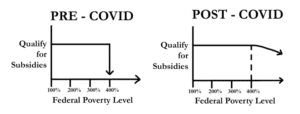
To give you some history, as part of the American Rescue Plan during COVID, these subsidies were extended to those with income beyond 400% of the poverty line. This means that you could make over 400% and you would still get a subsidy. It would simply just taper off as you see on that left hand side, you’d simply receive less and less until you went to zero. That is no longer the case.

Starting 2026, if you cross that 400% of the federal poverty line, even by $1, you’ll lose 100% of your subsidy. As you can see on the right hand side, it’s a cliff. You will, you’ll fall off that cliff if you cross that.

So how much is 400% of the poverty level? Well, I’ve got it highlighted here. You can see on the left hand side the household. If you’re a retired couple, empty nester, maybe, then you can follow the line to 400% 84,600. If you’re single, potentially have a kid or two at home, you can, you can look at your respective household size, but that is going to be the, the 400% of poverty level.

This is 2025s. 2026s has not been published yet. A quick Google search will tell you, but just be aware of that. It typically does go up every year, but, this is 2025 per now.

Okay, here is another graph showing exactly the same thing, but I feel like it displays the difference between 2025 and 2026. Much more clear. So going from left to right, this is the income that a couple at age 64 could make. And then from on the vertical access, you can see the amount of subsidy they would get.

If they only made $35,000 per year, they would get a $25,000 subsidy in federal subsidy to help pay for the health insurance. And then as their income gets higher, the subsidies become less and less.

And then if you can see, I know it’s kind of small here, but the income between $84,500 and $95,000, that subsidy in 2026 goes straight to zero, whereas before this subsidy would be tapered off until eventually hit zero.

So if you are on Obamacare and are currently receiving these subsidies, let’s talk to make sure that your income for 2026 is gonna fall in the right spot and that you don’t cross this 400% of the poverty level for your household and potentially increase your health insurance by $18,000.

So, okay, for this next part, I actually am going to change my, let’s see if I can share my browser here. I wanna give you a quick tour of healthcare.gov. So I’m gonna just throw this on the screen here.

As I mentioned, the website is healthcare.gov. If you’re ready to enroll, you can hit get coverage or apply for coverage. But today we’re gonna just browse plans and costs.

I’m gonna go ahead and just put the zip code for the office here in Orem. Once again, Utah is based on the federal. If you put in a zip code and your state is run on the state level, it’s gonna divert you to their website.

We’ll now, fill out the application here for our household. I’m sorry, I said application, but this is a quote for our purposes today. I’m going to say that I’m 64 years old and that my wife and I need insurance. I’m gonna say you and another person, hit continue. Are you married? Yes. Do you have any other dependents on your tax return? No, for this, in this case, we’re empty nesters today, and I’m gonna say that I’m 64. I am a male. Am I eligible for any other insurance through a job, Medicare, Medicaid? No. Am I a parent of anybody under 19? Not today. Not pregnant. I don’t use tobacco. I can hit next. This is for my spouse today. She’s also 64, female, and none of these apply to her as well.

So we can continue that. We have our household here, and this is gonna be the major factor here. You can put in your estimate and it will then show you what subsidies receive for 2025. As a reminder, this is showing 2025. It will update in the coming months for 2026. I’m gonna put $75,000 under that household of two 400% of the poverty level.

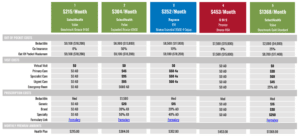
I’ll hit continue. And for a couple of 64 year old’s that, uh, report $75,000 of income, my spouse and I are going to share a subsidy per month of $1,623. And so this is gonna be applied to our plan. I’m gonna hit view plans here. And you can see here on the right hand side, they group the plans by bronze, silver, gold, platinum, bronze is gonna be the cheapest and the worst coverage. Platinum is gonna be the most expensive, the best coverage.

And so just know that there, the cheapest option for us here is the regions Blue Cross of Utah. You can see this plan was originally $1,700 per month. We apply the tax credit of $1,623, and so my spouse and I can get coverage for $110 per month. Now, as you can see here, the deductible is not pretty.

So this is more kind of a catastrophic plan. But if you wanted to, you can add a filter here. You can look for an HSA eligible plan, if that’s what you’re looking for. You can also search for some of these more expensive ones and better coverage. So I’m gonna select the gold plans, apply the filter here. You can see Molina is offering a plan. It was $2,100. After I $1,600 tax credit, I’m gonna have to pay about $535 per month. You can see the deductible is a lot more affordable.

And then obviously, feel free to scroll through these. You can see if you’re maybe looking for like Select Health I know works well with a lot of these in the area.

So anyway, it’s gonna be a different for everybody. And then also it’s going to be, um, specific to the area. And everybody’s gonna look for different types of coverage here. So let me see if I can get the screen back up here and hopefully that looks good there.

So one thing I wanna say is when it comes to selecting individual plans, that is where we will refer you to a health insurance expert, somebody who is doing this all the everyday. Here at Peterson Wealth Advisors we feel very comfortable projecting your income and helping to make sure that falls where you want it to be.

I don’t feel comfortable going over your prescription list or your favorite doctor and surgeon and getting you a plan there. So we’ll help you estimate your income, get you this number to put into that, that box there. And then at that point in time, the health insurance professional is gonna help you kind of take, take it from there and select the plan.

Here’s a quick summary of the plans in Utah. This is only helpful if you’re local, but you can see here, a lot of different options and then you can see the doctors and hospitals that are covered. And then as a reminder, open enrollment is November 1st through January 15th.

Okay, we’re now circling back to answer the question, what happens if my income doesn’t end up being exactly what I projected on my application? Well, the answer is you will reconcile any differences when you file your tax return.

If your income was way less than what you projected, you’ll get a credit for the subsidies that you should have gotten along the way. It will then be given to you in the form of a tax refund.

If your income was more than what you projected, you were receiving a higher subsidy than, than you should have been, you’ll actually have to pay back that subsidy if you cross that 400% of the poverty level, potentially the entire thing.

So a lot of people end up on the wrong side of this. And so I’ll just add here, if your income does change throughout the year, you’re able to go back into healthcare.gov and change your income to make sure that you’re paying as accurate as possible each month for those premiums to make sure that you’re not surprised come tax time.

I do wanna give you just a quick real world example. Some of the things we do for our clients here, here we have an example. David and Susan, they are retiring at the end of this year. They’re 63 years old, and they need insurance for two years before they hop onto Medicare at 65.

David and Susan have accumulated $1 million in retirement assets. They have $900,000 in 401k/IRAs, and then they have a hundred thousand dollars in a brokerage account or bank account.

David and Susan would like to have $8,000 per month, or $96,000 a year in retirement income, and they haven’t started Social Security yet and they have no pensions. So essentially we have complete control over what their income is going to be on their tax return.

So rather than sending the full $8,000 per month from all of the, the 401k/IRA taxable accounts, we will send only up to, or just before 400% of the poverty level from these taxable accounts. And the rest we’re gonna send from the bank or brokerage accounts to make sure they qualify for these subsidies.

By doing this, David and Susan get to spend their desired monthly income in retirement, but then they also get to qualify for around $18,000 of health insurance subsidies per year until they hop onto Medicare.

To wrap it up here, the marketplace insurance, before I turn it over to Lisa, just wanna take a moment to explain how marketplace insurance can fit into your financial plan. Healthcare is an important part of any financial plan, so understanding it is critical.

Now, marketplace can be a great option to use until Medicare kicks in, but it’s important to be able to have a clear idea of what your income will be in retirement. Because the marketplace uses your best estimate of your income to qualify for a subsidy, having a sound financial plan in place that allows you to pinpoint what your income is going to be in retirement is extremely helpful. So you don’t have any tax surprises come April when you file.

Another important aspect for marketplace is that there may be ways that you can qualify for a higher subsidy by reporting lower income for tax purposes, while at the same time providing you for that desired cash flow in retirement, like we talked about with David and Susan.

This is just another reason why we recommend having a retirement plan. Again, if you have any questions about the the retirement plan or the the health insurance, please let us know. We’d love to talk about your situation.

Medicare Planning – (19:31)

Daniel Ruske: Okay, I know that was a lot, but that is, that wraps up the, the pre 65 insurance. And so at this point we’re gonna be talking about those of you who are leading up to 65 or 65 and older. And so Lisa, I’ll let you, they jump in and tell us about Medicare.

Lisa Evans: Thanks Daniel. I also wanna echo what Daniel said with just having a financial plan in place. Because sometimes even with Medicare and the insurance that you put in place, knowing what you have to work with and your income that you’re gonna be able to retire on can help that planning as well. So it’s important to kind of have all those pieces in place.

So really quick, just kind of understanding what Medicare is. There’s Medicaid and Medicare, and I often hear people say, you know, I’m getting Medicaid or I’m getting Medicare, and they don’t necessarily know the difference between the two.

So Medicaid care is where the health department, it’s the National Health Insurance Program for people over 65. And so it’s the care of people over 65. Medicaid is the aiding of people who are financially struggling. So Medicare is for your care. Medicaid is for aiding people. So we’re gonna talk about Medicare today.

It’s administered by the center of Medicare and Medicaid Services. So everything’s regulated by CMS and your enrollment into Medicare is done through the Social Security Administration. So as you apply and things like that, we’re gonna use Social Security to do that or socialsecurity.gov to do that.

Everyone over 65 is eligible for Medicare. This includes all US citizens and legal residents who have lived in the US continuously for at least five years. Some people under 65 can get Medicare if they’ve received Social Security benefits for disability over more than 24 months. They have ALS or end stage renal disease.

But in our discussion today, we’re just gonna talk about people that are over 65. There’s a lot of things in the fundamentals of enrollment and I’m excited to talk to you a little bit about those today.

First, we’re gonna start with enrollment and understanding that this is really important. Unless you’re covered by credible employer work insurance, you must enroll in original Medicare when you turn 65. So I’m gonna refer to original Medicare as what the government requires you to do.

So unless you have a credible work employer group plan in place, you have to enroll in original Medicare when you turn 65. Meaning you or your spouse can be working and you can get work insurance through either one as long as you’re employed.

If you’re no longer employed and you have a retirement plan with your work, it’s not considered credible. And as long as that stays in place forever, that’s no big deal. But if you ever lose that insurance, you’ll have to go back and apply for part B and A, and there can be penalties for that. So it has to be credible work insurance. If you aren’t sure whether yours is credible or not, you can always ask your HR department. They have a letter that defines whether or not it’s credible and they’re required to, to send that out and give that information to you.

If your employer has under 20 employees, you’ll also need to check with your employer to see if your required to enroll in both parts A and B to get your healthcare services. A lot of times if it’s a small company, you will be required to enroll in parts A and B in order to maintain that insurance.

Another thing to evaluate is even if you have work insurance, sometimes those copays, those max out-of-pockets and deductibles can be expensive. Sometimes your premiums are expensive. So it’s worth comparing original Medicare and your work coverage and seeing which option is financially better for you.

Sometimes it’s better to stay on your work insurance and sometimes it’s better to go onto a Medicare program and the benefits are a little bit cost effective or cheaper or things like that for you. So something to look at and to evaluate. And you can ask an agent like myself or a healthcare care professional to help you evaluate that. They can help you compare different plans and different options and look at the summary of benefits between the two programs.

So what if you don’t enroll in Medicare on time? The consequences can be pretty dire. First, you’ll be charged a late enrollment penalty, and the longer you go without enrolling, the higher the penalty will be and it’ll continue for the rest of your life. So they’ll apply that a penalty for your premiums forever.

Second, sometimes your healthcare expenses may not be covered simply because if they require Medicare as your primary insurance and then you have a secondary insurance, but you don’t have that primary insurance, the secondary insurance will be waiting for Medicare to pay. If they never pay, then your secondary insurance won’t kick in and they won’t cover anything, so you’ll be left with the entire bill. So there’s a risk there by not having that.

And the last thing is that sometimes your in private insurance options are limited because some of those things, if you wait too long, they go through underwriting or health screens screening or things like that, premiums can be higher. And so it’s important to look at your options right when you’re able to enroll so you can avoid those penalties and those different things.

If you’re receiving Social Security when you turn 65, you will automatically be enrolled in parts A and B. So if you’ve already taken out Social security in three months before your birthday, they will send you the red, white, and blue card and have you enrolled in parts A and B.

Now, if you’re still working, but you’re taking Social Security and they send you this automatic enrollment to parts A and B, but you wanna stay on your work insurance, you can decline Part B.

There’s an application that you have to fill out some paperwork that has to be done. My email will pop up at the end of this. If you wanna reach out to me, I can send you that paperwork and those application forms to help you submit that and go through the process of how to do that.

Supplement and advantage plans or Part D or different things like that, those insurances are not automatic, even though your Medicare is part A and B are. And so you’ll have to choose to proactively get enrolled in those plans before your birthday or your open enrollment window closes.

Your coverage will start on the first of the month you turn 65 when you’re automatically enrolled. So if your birthday is June 15th, your coverage will begin on June 1st.

So the initial enrollment period for those who aren’t covered by a group plan or who aren’t automatically going to enroll will start three months before you turn 65 and last three months until after your 65th birthday. So you have a total of a seven month window.

So before, if you enroll before you turn 65, your coverage will start on the first of the month that you turn 65. Going back to June 15th, if your birthday is June 15th, it will start June 1st.

If you enroll the month of your birthday, meaning you wait till June to enroll, your coverage will start the next month. If you wait two months or month, it always enrolls or starts the month after you’ve enrolled in the program.

So they won’t retro it except for on the third month, if you sign up on the last of that window, they will retro it to the beginning of that month. Other than that, it’s, it’s always the month after you put the application in the cat.

There is one little situation that that’s different, and that’s if your birthday happens to fall on the first of a month. So if your birthday was June 1st, your coverage would actually start May 1st and your window would open three months before that.

So you would actually have your window open in February instead of March. So if your birthday happens to be the first, you can pay attention to that one little window that will open up a little bit early for you and to be able to get that coverage started sooner.

There are special enrollment periods, and these are for people who are covered by employer group plans. So when you turn 65 and you have work insurance, you do not have to enroll, but when you decide that you want to retire, you can get your part B in place anytime before your coverage ends, or you have an eight month window after your coverage ends that you can get your insurance in place.

I would always advise to get your coverage in place before your old coverage ends, just so you don’t have gaps in your insurance coverage, but you do have a window there if for some reason you feel like you wanna take advantage of that.

Part D is your prescription drug coverage, and that window of coverage is only 63 days from the time it ends. So you’ll wanna make sure that you, you don’t miss that.

You wanna avoid late penalties by enrolling on time, making sure that you pay attention to your special enrollment periods and you’re avoiding the gaps. And most importantly, just kind of be ahead of the game so that you can make sure that you don’t have gaps in your coverage and that you keep the coverage you need.

So the question is, how do we sign up for parts A and B? And it’s pretty easy. You can go to socialsecurity.gov and there’s a little tab that will say Medicare, you’re gonna click on it, and then a big bar you can see on this slide that says Apply for Medicare benefits. You can click on that or you can call Social Security, at the 1-800 number.

This number, just so you know, you’re gonna be online for a little while waiting. It’s a really slow response time. There are local numbers that are way faster. If you wanna reach out to me, I can email those to you. If you’re applying for part B and or Medicare when you turn 65, this is really easy to do online.

If you are retiring and you’re after 65, you’re gonna need some forms and you’re gonna have to drop those off in person. So if you need those forms, feel free to email me and I can email those forms back to you.

You usually will take those forms, have your HR person fill out their portion, you fill out your portions of the forms, and then you’ll drop those off at the Social Security office and then they’ll process them that way. So that’s kind of a little bit about that enrollment.

Okay, we’re gonna talk really quick about what original Medicare is and what it looks like. Okay, so first original Medicare is what covers or part a original Medicare Part A is what covers your hospitalizations, your skilled nursing facilities, your home healthcare and your hospice. It is free to those who have worked or their spouses worked for 10 plus years and paid Medicare taxes.

If you don’t qualify for part A for free, you can pay a monthly premium to get the coverage. For this presentation, we’re gonna assume that everyone here is getting it for free. If you have questions about that premium, you can always reach out to me, but as long as you’ve worked for 10 or more years, you or your spouse and pay those taxes, it’s gonna be a free premium. It’s typically free for most people.

So Part A does have deductibles, copays, and co-insurances. And one of the things that’s important to understand about original Medicare is that there is no max out of pocket. So if you go to the hospital and stay for a week, you can see from this chart it’s a deductible of $1,676. And if you go back to the hospital sometime within a year that’s more than a 30 day break after your first visit, you’ll pay that deductible again. And heaven forbid you end up there three times, you’ll pay it again as long as there’s more than a 30 day break between the previous visit.

So with no max out of pocket, you can see that if something catastrophic happened in your life, that could add up pretty quickly.

Part B has a monthly premium of $185 for 2025. Rumor has it that this is gonna go up to about $200, $206, something like that for next year. This part covers your doctor visits, your emergency room surgeries, radiology, any type of emergency care, things like that. So this is kind of gonna be where the bulk of your coverage is going to come when you need things.

And the thing to understand about original Medicare is that if you’re to stay on original Medicare each year in January, you’ll have a $257 deductible for each calendar year. And then after you reach that deductible, you’re gonna have cost sharing of 80/20 for all approved services for the rest of the calendar year.

So let’s go through an example. If you had knee surgery in January and that cost of that knee surgery was $60,000, you would pay your annual deductible of $257, and then you would pay 20% of that surgery, which if it was $60,000 would be $12,000.

And if in November you slipped on some ice and broke your arm and had to have another surgery, which cost another $40,000, you’d pay another 20% on that surgery as well, which would be another $8,000. So with original Medicare, again, there’s no max out of pocket. So if those two scenarios happened in the same calendar year, you would pay the $20,000 out of pocket after you paid your $257 deductible.

So as you can see from this example, not having a max out of pocket puts you at risk for a lot of expense should anything catastrophic happen in your life.

Also understand that Medicare doesn’t cover everything. There is a Medicare and new booklet that they send out that you can access to on medicare.gov has 20 pages talking about all the things that Medicare does cover and only one page talking about what it doesn’t.

There’s a lot of things that aren’t necessarily going to probably make a big difference. Maybe not cosmetic surgeries or things like that. They don’t cover long-term care, but they also don’t cover any dental vision or hearing in original Medicare and some of these other things. And so these things you have to cover yourself, that’s all out of your own pocket.

We’re gonna pause for just a second talking about original Medicare and talk a little bit about those premiums. I’m gonna turn the time back over to Daniel. He’s gonna talk to us a little bit about the premiums with original Medicare and how those can vary depending on your income.

Daniel Ruske: Perfect. So you get too many numbers on this screen and, and then it’s, it’s my turn again, I guess. I just wanna take a minute and explain this. First of all, this is IRMAA, so this is the income related monthly adjustment amount.

And so the way this works is you pay, like Lisa mentioned, $185 per month for 2025. We don’t have 2026s yet, so just be aware of that. Like she mentioned the speculation about, what’d you say, $206 or so. And this is gonna be per person per month for Medicare Part B and D.

So if you make less than a certain amount, then that’s what you’re gonna make, that’s what you’re gonna have to pay per person per month. So the graph shows how much more you would have to make to increase your original Medicare premiums per month.

Now they don’t make it super simple. Your income in 2025 does not determine your original Medicare premiums in 2025 like it did in the Obamacare, right? Obamacare, you project for the year and you look at that actual year. This is not the case for Medicare. They actually look back two years.

So your income you made in 2023 is going to determine your original Medicare premiums in 2025. So once again, for the premiums you’re paying in 2025, you are looking back to 2023’s income. You’ll see a single filer on the left column and then a minoring filing joint there in the middle column showing what income you would have to be be at.

Once again, this is modified Adjusted Gross Income to have those increased premiums. So for instance, if a married finally couple, if you made over $212,000, then in 2025, 2 years later, your premium’s gonna be up to that $272 per person per month.

So this becomes difficult to start planning because as I mentioned, we don’t have 2026’s numbers yet, but as we know, 2024, that income is already in the books. It’s already been filed. So we’re making projections on as to where your income will be in 2024, to calculate your premiums for 2026 before they even publish the brackets.

And one important note here, these brackets work also similar to the cliff as the pre H 65 insurance, where if you cross into the bracket by even $1, you will pay more for your original Medicare premiums two years later.

And so we have to be very careful when we’re looking at Roth conversions and these tax projections to make sure that we leave a sizable buffer to make sure we don’t accidentally cross into one of these higher IRMAA brackets. Just to kind of get you familiar with that name, and cross that threshold.

So this says the same thing just laid out a little bit differently. Once again, for 2025s premiums, we are looking at the income on 2023. And then at the same, the same planning scenario kind of works out for Medicare as it did for the pre 65 insurance, where we can manipulate the income on the tax return by sending clients the money from the correct bucket, whether it’s taxable or non-taxable, to make sure we don’t cross into one any of these unwanted added insurance costs.

I’ll kick it back to you, Lisa.

Medigap/Supplement and Medicare Advantage Options – (37:28)

Lisa Evans: Okay. One thing I think too, Daniel can also help you with besides keeping yourself inside those tax brackets is that after you turn 65, there are rules and regulations about you continuing to contribute to your HSA account and there can be tax fines if you can continue to contribute after 65.

And so Daniel and his team might be great resources on understanding at what point you need to stop contributing and where you need to go from there so that you don’t incur those fines as well.

So the next thing we’re gonna talk about is our options of how we can remove the risk of those no max out of pockets with original Medicare from yourself and place those risks into the responsibility of an insurance carrier, thus protecting yourself and your finances from catastrophic events in your life.

There are typically two options to place put in place with original Medicare, and no matter which option you decide to go with, you will have to keep original Medicare’s parts A and B to add these options, and you’ll always pay part B monthly premium, which again, this year has been $185.

So just know that no matter what you decide to add or put onto your plan, you’re gonna always pay that part B premium.

The first option that we’re gonna look at is a Medicare supplement or a Medigap plan. Sometimes they’re referred to as as synonymous. A supplement and a Medigap plan are the same thing.

Medicare is referred to as in parts. So there’s part A, part B, part C, part D, where Medigap plans are referred to as plans and they’re different. Medigap plans are standardized. They’re identified by letters A through N. So if you buy a Plan F in California, it will be the same offer, the same benefits as a Plan F in New York.

However, the premiums can vary considerably from company to company and from area to area. For example, in one Florida County, the monthly premiums for Plan F ranged from $192 to $465 per month for exactly the same policy.

So this is really important why you have to evaluate your Medigap insurance because a lot of them charge differently, but they are required and regulated to provide the same benefits and just often charge different fees.

Medigap policies are issued by private insurance companies. They’re designed to fill the gaps that Medicare doesn’t cover. And though they are not affiliated with Medicare, they do have to follow certain federal and state laws designed to protect to protect you.

We’re going to talk about Plan G just because it’s the most inclusive plan that’s available for anybody that turns 65 after 2020.

So if you look at this chart, you can see there’s other options, but again we’re gonna just refer to plan G. If you’re interested in the Medigap options, we can kind of look at the different pricings and different places, understanding that the different plans have less coverage and so they are cheaper, but you will sacrifice some of that coverage.

The reason they call these Medigap plans again is because they fill in the gaps of original Medicare. So you still pay your part B premium and you would also pay a monthly premium for the Medigap plan. You would also pay an annual deductible, that $257 annual deductible, and then Medigap Plan G would pay all of your copays, cost sharing, and co-insurances for anything that’s covered by original Medicare.

So we’re gonna go ahead and look at our example that we talked about with the knee surgery before. So if I have knee surgery in January and I’m on a Medigap plan G, the cost of that surgery is $60,000. I would pay my $257 annual deductible, and then the surgery co-insurance of the 20%, which would’ve cost me 12,000, would be paid by my Plan G.

And then if I slipped on ice in November and broke my arm again, that other surgery would cost $40,000 and my cost sharing would’ve been $8,000 would be covered by Plan G.

So what would happen is, if I was on Plan G, I would pay my part B premium, I would pay my monthly premiums for Plan G, and then I would pay my annual deductible, and that would be all that I pay. And Plan G would pick up the expenses on both of those surgeries, that $12,000 and that $8,000.

So it can save a lot of money for some things that happen that are are large and catastrophic, but you do have a constant payment each month. So the pros of a Medigap option is that the primary insurance is original Medicare, so you’re gonna keep your original Medicare and then the Medigap fills in those spaces.

A nice thing about a Medigap plan also is that there’s no networks and you can choose anywhere that med original Medicare covers or accepts, you can go to those type of places. So it travels really well across the United States. You can go see doctors anywhere you want in the US.

It’s also guaranteed renewability, meaning once you have that plan in place, they can’t kick you out. If you have health problems or issues when you turn 65 or the first time that you enter the Medicare market, it retirement, you’re guaranteed issuance, they can’t reject you because of previous health problems. And then you maintain that guaranteed renewability as long as that plan is in place.

And once you pay your monthly premiums, there’s no, or little to no out-of-pocket costs except for those monthly premiums and that annual deductible. The cons of a Medigap plan is that those monthly premiums can increase with age. There’s not prescription drug coverage included. The policies may have to be underwritten. That’s meaning if you didn’t jump in one of those guaranteed issuance windows, meaning turning 65 or retirement. If you want to go from an advantage plan to a Medigap plan later, you have to go through underwriting then. And some of those additional benefits like dental hearing and vision are still limited on these plans. So there isn’t always coverage in those ways.

There is not one best option for everyone when it comes to picking your insurance coverage. With a Medigap plan, you pay the same premium each month, but you pay for very little along the way as you go to the doctors and things like that. You pay a premium to the carrier for the carrier to assume the risk which could be about $200 with prescription drug coverage included. With a Medicare Advantage plan, you pay a lower monthly premium if at all, but you’ll pay co-insurances, cost sharing and max out of pockets, and things like that.

So we’re gonna talk a little bit about those advantage plans in just a second. We don’t have time to go into all the details, so it’s important to get some help. Looking into those options, you can reach out to someone like myself. You can go onto medicare.gov. There’s different ways to to kind of sift through all that information that’s available.

Really quick, just because it goes along with original Medicare and the Medigap plan is the prescription drug coverage. This is what they call Part D, and Part D is simply prescription drug coverage. It is required by Medicare for you to have prescription drug coverage or Part D in place.

If you do not, there are penalties that do incur for this as well. If you don’t have a plan. It’s offered by private insurances who contact contract with Medicare. Each prescription drug plan is slightly different. So not every carrier is going to cover every prescription drug the same. So it’s important to shop carefully for your drug plans.

Agents like myself can take your prescription drugs and look at the different carriers and compare the coverage for you and help you to see which plans will cover your drugs most inclusively.

There are also some inexpensive drug plans available. So if you don’t take a lot of drugs and you’re like, I just have to have this because I have to have that, there are some inexpensive ones in place that you can put just to avoid that penalty.

The second way you can get Medicare coverage is through Medicare Advantage plans. And this is typically what you see all the commercials on TV about and are throwing out all these different incentives of things like come get thousands of dollars in grocery benefits and things like that. A lot of the things you see in the commercials are meant for people who qualify for Medicaid and Medicare.

So don’t be bamboozled by all the commercials you see, not everything there is true and honest for everyone that is out there. They’re usually very limited on who can qualify for the stuff that the commercials talk about.

Medicare Advantage plans are also offered through private insurance companies that contract with Medicare. Medicare pays an amount to the plan for each member’s care, and the plan is responsible for providing that care. Advantage plans look a lot like your typical insurance that you’ve had for most of your life. There are many companies in the area offering advantage plans.

So if you go this route, it’s important to shop for plans and find one that meets your needs. You will have to use their doctors in network and their hospitals in network, and you’ll wanna a plan that includes your prescription drug coverage. So you will want to look up and see if your doctors and prescription drugs are in their network before you enroll in a specific advantage plan.

Again, an agent like myself, or there’s websites that you can go individually to each carrier and enter in all of your information and they can show whether or not you’re in your network.

You may be able to get extra benefits on advantage plans. They often include dental hearing and vision. They often include things like gym memberships. They sometimes include over the counter benefits. Sometimes they have grocery benefits if you have some type of chronic issues. So it’s important to shop carefully to find plans that will fit your needs.

Part C and D are provided in an advantage plan. So an advantage plan to me looks like a big circle that incorporates everything. It wraps it all up and puts it in kind of a little package for you. So it’s gonna cover that part A, it’s gonna cover that part B, it’s gonna cover your prescription drug coverage, put it all in, and then it’s gonna give you some other things as well.

But like your typical insurance that you’ve had all along the way, you’re gonna have possibly deductibles, premiums, copays and co-insurances that you’re gonna pay along the way.

Medicare Advantage does offer some really great things. All your preventative care has to be included. So most of the time these plans will offer preventative care for zero copayments and co cost sharing. You do get pretty low monthly premiums on these plans. And so you, the pros of a Medicare Advantage plan is that you’ll have a low monthly premium, you’ll have prescription drug co coverage, you will have a max out of pocket, which original Medicare doesn’t offer you. So you do have the limited max out-of-pocket limits, and you can get those extra benefits.

The cons of a me Medicare advantage plan is that you have to be inside the provider networks. The plans can change from year to year. Some of the things inside of an Advantage plan still have only 20% coverage of co-insurance, so they still will only cover it, the 80/20, and your healthcare will be managed by the insurance company. And so they kind of decide what that’s gonna look like and how that works.

So it’s a big decision and it needs to be individualized. There’s not necessarily a right or wrong answer, but it is something that you wanna be thoughtful about because it does determine a lot of how your care will work for throughout your retirement.

Okay, this image shows two ways to have Medicare.

So on the left side you can see that your original Medicare is the part A and the part B, and if you keep original Medicare, you add the Part D, which is under that, that’s your prescription drug coverage. And then you have that option of adding the Medigap plan.

So that would be option one is you put that all in place and keep the coverage that way. And option two is gonna be the right column, which is a Medicare Advantage plan, and it takes in and puts the A, the B, and the D altogether into a plan, which again would have those premiums copays max out of pockets and things like that as you go.

So in this last slide, you’re gonna see what it really is comparing the two, what you’re facing. So with the doctors in a Medicare supplement plan, you can go to any doctors and hospitals as long as they accept original Medicare.

Where in an advantage plan, you’re gonna be required to use the hospitals and doctors that are in the network of the plan you pick. In a supplement plan, you do not have to get referrals to see specialists in an advantage plan. There are some networks that require referrals and some that don’t. It kind of depends on which plan you pick.

With a Medicare supplement plan, you’re not restricted to the network, where in a Medicare Advantage plan, you are required to stay within their networks.

In a supplement plan, you can apply to buy your Medicare supplement insurance anytime after you turn 65 and join the Medicare part B. So you can add it, you do have to go, like I said, go through underwriting if you wait till after your 65th birthday window open. So you’ll wanna make sure if that’s something you’re looking at, you wanna get to that.

An advantage plan, if you’ve been on original Medicare for five years and you decide you want to join an advantage plan, as long as it’s during an annual enrollment period, you can add that advantage plan at any time.

The cost with the supplement plan, again, are the monthly premiums and the cost with the Medicare Advantage plan is generally a lower monthly premium, but you’re gonna have that cost sharing and co-insurances along the way.

And then prescription drug coverage is not included in a Medicare supplement plan where it is often included in the advantage plan. So that’s kind of what the difference is between those two and how they look. And that kind of wraps up what I was going to talk about today.

Summary – (51:49)

Daniel Ruske: Thank you, Lisa. Great. So once again, just to summarize, we talked about insurance for pre 65, primarily Obamacare. We talked about those changes between 2025 and 2026. We talked about Medicare. Lisa covered it in detail. The costs, the difference between advantage and supplement plans.

And then once again, I just want to mention that with our clients, the way we work with Lisa is we can help you on the timing of Medicare. We sometimes even help you file for Medicare. And then at that point in time we pass it over to Lisa and she’s gonna help you select whether an advantage or a supplement plan, whichever one is best. And then obviously the many options on both of those sides, the array of Advantage plans, and then for the Medigap plans.

So key takeaways here, the cliff on the under age 65, and then you can see the open enrollment dates there. And then for Medicare over age 65, make sure the enroll on time, choose the best plan for you. And then you can see the dates there.

That’s the end of our presentation.

Question and Answer Session – (53:02)

Thank you again for coming. Just a reminder, we’ll take a few questions here. I know Jeff’s probably been busy the entire time. If you do have questions or if your question is more lengthy than we can type out or answer right now, please reach out to one of us.

We have info@petersonwealth.com, and then Lisa’s contact is there if you wanted to get to her directly: evans4health@gmail.com.

Well Jeff, what questions do we have? Do we have any that you think would be beneficial for the group?

Jeff Sevy: Yeah, we have a couple here that I wanted to save till the end because they were great questions. Some of them might be geared more towards Lisa, so I’ll ask those.

Q: What if you get a PPO Advantage plan, do you still have to have in network?

Lisa Evans: Great question. So you do not have to stay in network, but often if you get a PPO plan and you can go out of network, the co-insurance can be up to 50% of whatever the cost of the service is. And so it can get really expensive even though there’s the flexibility of it. It’s a really expensive option. But if that’s something you feel like you want that flexibility, you’re gonna pay to have that flexibility incorporated in your plan.

Q: Can you provide more details on the fines if I continue to fund my FSA account?

Lisa Evans: Daniel, do you know that one? I just know that there’s like a double tax that happens. That’s all I’ve got.

Daniel Ruske: Yes. They’re significant enough that you’re gonna want to undo it and it’s just a big chore to undo it. And so I actually don’t know the details as like the specific dollar amounts. If you over contributed a hundred dollars or something, how much you would have to pay. But what I do know is we’ve helped clients unwind them and it’s just not fun. And so that’s something to be aware of.

Q: If I am on an advantage plan, can I switch to original Medicare during the the annual enrollment period?

Lisa Evans: Yes, you can.

Q: How soon can I, or should I engage with a healthcare professional to begin planning for Medicare enrollment?

Lisa Evans: I think you can engage anytime you’d like. I have met with clients sometimes a year in advance just because they wanna kind of understand what that looks financially for them. And so we’ve kind of sat down, looked at their options, we’ve weighed out whether they wanna stay on work insurance, they wanna continue to, or they wanna switch over.

So sometimes it can be a couple years before they’re even ready to retire, as we’re kind of looking what those options look like. So if you feel like it’s something that you want to understand, reach out to somebody. If it’s something you’re like, nah, I’m fine where I’m at, you can wait a little bit. I don’t think it’s too soon to reach out anytime.

Daniel Ruske: Can I jump in here? As people are approaching 65, I don’t know how we end up on some list, but I feel like our mailboxes are just bombarded with advertisements.

And so sometimes it might be nice to just kind of take a lap interview with a couple people, see if Lisa’s a good match or we have others. And that way you can just ignore everything that is coming because you know that you’re taking care of.

Lisa Evans: Can I throw something out there too? If you do engage with an agent and you don’t feel like they’re doing what you want them to do, feel free to reach out to a different agent. There’s a lot of agents out there who don’t take care of their clients the way that they should.

I’ve had a client that I had an, he had an agent for 10 years and he had been diagnosed with diabetes five years previously and his agent had not been aware and switched him to a plan that was specific for diabetes.

And if your agent isn’t looking out for your best interest, go find an agent who will look out for you. Because that’s really important to have somebody that’s looking out for you.

Jeff Sevy: Awesome, thank you. We’ll do one more question here and then and close up. For anyone that didn’t get their question answered, I included a link for a free consultation with us. So you can go ahead and schedule there and get your questions answered.

Q: Is DMBA coverage after retirement an advantage or a supplement plan, or do they offer both?

Daniel Ruske: This is gonna be a supplement plan. Yep. And so if you have questions specifically about DMBA, let’s talk, we work with a lot of retirees from BYU or church employment. It’s a supplement plan, so we, we can talk about that. That’s kind of pretty specific, so.

Jeff Sevy: Okay. Awesome. Thank you Daniel. Thanks Lisa.

Lisa Evans: Can I just throw one more thing out really quick? I’m also happy to do free consultations just so you understand, as an agent we get paid through the carriers and so our time is free for you if you need something. If you have questions, we’re here to answer those for you and we want what’s in your best interest. So that’s kind of how that works.

Daniel Ruske: Awesome. Okay, thanks again all in the presentation and thanks again for filling out the survey.


Medicare Made Simple: Understanding the Basics and Upcoming Changes in 2025

Medicare Made Simple: Understanding the Basics and Upcoming Changes in 2025 – (0:00)

Carson Johnson: Welcome, everyone. Thank you all for joining us. We’ll give it just a minute while everyone gets connected.

Isn’t it a beautiful fall afternoon today? This is one of my favorite times of the year, with the leaves changing and the chance to enjoy the nicer weather. Hopefully, you all have some fun plans for the upcoming holidays.

Before we get started, just a couple of quick housekeeping items. There is a Q&A feature in Zoom located at the bottom of the Zoom application on your computer or whatever device you’re using. Please feel free to ask any questions throughout the session. I have my colleague, Daniel Ruske, here with me. He’s a Certified Financial Planner and one of our lead advisors. He’ll be monitoring the questions, and if there’s one that’s relevant to everyone, we’ll address it during our discussion today.

At the end of today’s presentation, there will also be a survey. Thank you to all of you who have been filling out these surveys. Your feedback has been incredibly helpful for us, both to gain insights and to gather suggestions on topics that are top of mind for you.

With that said, let me go ahead and introduce myself. For those of you who don’t know me, my name is Carson Johnson. I’m a Certified Financial Planner and one of the lead advisors here at Peterson Wealth Advisors.

Also joining me today is Shane Morris. Shane is a licensed Medicare agent and the owner of Medicare Advocates. He has over 13 years of experience advising retirees about Medicare and helping them find the plan that best suits their needs. Shane, thanks for joining us today and helping us tackle some of the more challenging questions.

Shane Morris: Thanks, Carson. I appreciate it. Couldn’t have said it better myself.

Carson Johnson: Perfect. Let’s talk about today’s agenda.

If my computer cooperates here… So, what we’ll cover today are some important Medicare enrollment tips, understanding the costs associated with Medicare and how to minimize them, and comparing the differences between Medicare Advantage and Medicare Supplement plans, which I know is a big question for many of you. We’ll also touch on some upcoming changes to Medicare that will take effect in 2025.

Medicare Basics (3:00)

I want to start today with a question: How many of you have ever tried assembling a piece of furniture from scratch?

That’s kind of a rhetorical question, as I’m sure many of you have experienced this at some point. Whether it was a bookshelf or a table, you opened the box, dumped out all the pieces, glanced at the instructions, and thought, “This might as well be in a different language!” So you decided to just figure it out yourself, thinking, “How hard can this be?”

But as you dive in, by the time you get to step four, you’re scratching your head thinking, “I’m missing some screws here. Something’s just not quite right.” What should have taken 30 minutes ends up taking hours of your day, right?

Navigating Medicare can feel like a similar experience. There are many pieces, and at first glance, it may seem simple from a big-picture perspective. But if you miss a couple of important details, it can cost you time, money, and even your health.

Today, I want to focus on creating that “Medicare assembly manual” for you. Shane and I will work together to help build a solid foundation for your healthcare in retirement and to help you avoid some of the common pitfalls we see.

When it comes to Medicare, most people give very little thought to healthcare costs while they are still working. Healthcare costs often aren’t factored into their retirement income plan. Additionally, some people mistakenly believe that Medicare will cover all of their healthcare costs. For those who are wondering, that couldn’t be further from the truth. There are deductibles, co-payments, and co-insurance costs that will fall on your shoulders unless you plan effectively.

The truth is, Medicare is not free, nor is it automatic. There is a lot of information out there about Medicare, but it is a massive program—just like Social Security. What’s unique about Medicare is that it varies from state to state and depending on where you’re located.

Common Medicare Questions Retirees Ask

We want to address some of the common pain points that retirees face. Here are a few examples of questions we often hear:

  • When should I enroll in Medicare to avoid penalties?
  • Should I enroll in Medicare if I’m still employed?
  • Should I choose Original Medicare or a Medicare Advantage plan?
  • What is not covered by Medicare?
  • Will Medicare cover long-term care costs?

We’ll keep these questions in mind and address them throughout our discussion today.

So, let’s start with the basics.

Who is eligible for Medicare?

Medicare is available to anyone over the age of 65. I think most people are familiar with that part. This includes all U.S. citizens and legal residents who have lived in the U.S. continuously for at least five years.

There are some individuals under the age of 65 who can qualify for Medicare because they receive Social Security disability benefits. But for our discussion today, we’re going to focus on the main group—those over 65. If you are part of that smaller group, it’s especially important to work with someone who can help guide you through the planning process.

Understanding the Four Parts of Medicare

Many retirees don’t realize that Medicare is divided into four parts:

  • Part A is hospital insurance, which covers inpatient hospital care, skilled nursing facility care, hospice, and so forth. Most people don’t have to pay a premium for this part, as long as you or your spouse have 10 years’ worth of work history paying into Medicare taxes. For most people, this part is free.
  • Part B covers some of the costs of medical services, such as doctor visits, procedures, diagnostic tests, and other outpatient care. There is a premium associated with Part B, and it can be confusing for some retirees if they don’t fully understand how it works. We will cover that in more detail later.

Parts A and B together are known as Traditional or Original Medicare. One of the common myths we hear from retirees is that Parts A and B will cover all or most of their retirement healthcare expenses. Unfortunately, that’s not the case. You’ll still have copays, deductibles, prescription costs, and other out-of-pocket expenses.

In fact, according to the Center for Retirement Research at Boston College, they estimate that the average person covered by Medicare will pay more than $4,300 per year—or $8,600 per couple—annually for out-of-pocket expenses. So, there will be costs, and the way you cover those is through what’s called supplemental coverage from private insurance companies, which is where Parts C and D come into play.

  • Part C, also known as Medicare Advantage, is an alternative way to receive Medicare benefits. I like to think of it as a “one-stop shop” that bundles all four parts into a single package offered by private insurers. It often includes prescription drug coverage, making it a convenient option for some retirees.
  • Part D is strictly prescription drug coverage, offered by private insurers who contract with Medicare. Each prescription drug plan is different, depending on where you live and the providers in your area.

It’s important to consider getting a Part D plan early on, even if you don’t currently take any prescription drugs. We’ll discuss why that might be a smart decision in just a moment.

When it comes to enrolling in Medicare, many people end up increasing their retirement medical expenses right from the start. This often happens when retirees either don’t enroll in Medicare on time or fail to get the related insurance policies on time, which results in higher premiums and other unwanted consequences.

So, let’s understand some of the fundamentals of enrollment that you should be aware of. The biggest takeaway is that, unless you are covered by an employer group plan, you should enroll in Medicare as soon as you turn 65. I know this isn’t new information for most of you—age 65 is the milestone for enrolling.

However, some people get confused when they’re still on an employer plan and think, “Well, I shouldn’t enroll in Medicare because I’m covered by my employer’s insurance.” As with any rule of thumb, there are exceptions. For instance, when you turn 65, some employer plans will designate Medicare as your primary insurer, meaning your bills need to go through Medicare before the employer plan kicks in. If you don’t enroll in Medicare, your employer plan may refuse to pay any expenses until Medicare processes the claim first, leaving you responsible for the entire bill.

So, it’s crucial to review your employer plan carefully to understand how Medicare will coordinate with your existing coverage.

What if you don’t enroll in Medicare on time? What are the consequences?

I’ve narrowed it down to three main issues:

  1. Late Enrollment Penalties: The longer you go without enrolling in Medicare, the higher the penalty can be, and it continues for the rest of your life. It’s a permanent increase, so it’s important to get this right from the start.
  2. Uncovered Healthcare Expenses: As I mentioned earlier, Medicare is often the primary payer in many situations. If your employer plan expects you to be enrolled in Medicare and you’re not, your healthcare costs might not be covered at all, leaving you responsible for the entire bill.
  3. Coordination Issues with Employer Plans: Not enrolling in Medicare on time can lead to unexpected coverage gaps if your employer plan doesn’t pay until Medicare pays first, which could create a costly oversight.

So, it’s essential to review your enrollment options and make sure everything is aligned, whether you are transitioning from an employer plan or signing up for Medicare directly at age 65.

I have a quick story about this. I had a client who believed that since he was covered by an employer plan, there was no need to enroll in Medicare—at least not in all parts of it. He was still working, and last year, he had an accident that required a trip to the emergency room.

After his visit, when they were sorting out the insurance details, the hospital informed him that his employer plan was refusing to cover some of the hospital expenses. The reason? The plan indicated that since he was now eligible for Medicare, Medicare should be the primary payer for his hospital expenses.

As a result, he ended up with a much larger hospital bill than he had anticipated. If he had enrolled in just Part A (hospital insurance) and not necessarily the other parts of Medicare, this issue could have been avoided.

So, the takeaway is: be sure you understand how your employer plan works and how it coordinates with Medicare.

Shane, do you have any other insights to add on that point?

Shane Morris: No, I think you covered it really well. It’s unfortunate when this happens. I had a similar case with a farmer in southern Utah. He decided not to enroll in a prescription drug plan because he wasn’t taking any medications at the time. Five years later, I met with him, and he faced a five-year penalty. He was shocked, saying, “You mean to tell me the government can penalize me even though I didn’t need any prescriptions?” It was a tough conversation, but yes, that’s exactly what happens. It’s definitely a complicated process, like assembling that piece of furniture we mentioned earlier.

Carson Johnson: Exactly. We also had a good question come in just now: “Can you explain the enrollment penalties further? What are the penalties if a person doesn’t enroll in Medicare Part A?”

If Medicare Part A is free for you, there’s no penalty for not enrolling on time. However, there are late enrollment penalties for Part B and Part D—which cover medical costs and prescription drugs, respectively. Shane, correct me if I’m wrong, but I believe the penalty is 10% of the premium amount for every year that enrollment is delayed. Is that right?

Shane Morris: Yes, that’s correct. It’s a 10% annual penalty on the premium for each year you delay enrolling in Part B or Part D. It’s even broken down into a monthly percentage, like 1% per month. But the key point is that this penalty is permanent—it’s not a one-time fee. You’ll pay it for the rest of your life.

That’s the surprising part for many people. They think it’s just a one-time fee, but it’s not. Unfortunately, I haven’t seen anyone successfully appeal this penalty. Once it’s applied, it’s very hard to get it overturned. I’ve never seen a case where they’ve waived that penalty, no matter the circumstances.

Carson Johnson: Good to know. Another consequence of not enrolling on time is that your private insurance options may become limited. If you’re in poor health or have a pre-existing condition, insurance providers that coordinate with Medicare have to accept you during your initial enrollment period, even if you have health issues. But if you don’t enroll during the appropriate time and try to apply for supplemental coverage later, you may be denied or charged a higher premium due to those conditions.

So, it’s essential to enroll at the right time to avoid these complications.

Understanding When to Enroll in Medicare (15:38)

Let’s talk about when it’s the appropriate time to enroll. There are essentially three key enrollment periods you need to be aware of to avoid these penalties.

Initial Enrollment Period

This period is for those approaching age 65. It’s a seven-month window that includes the three months before you turn 65, the month you turn 65, and three months after. The timing of when you enroll within this period determines when your coverage begins. If you enroll before the month you turn 65, your coverage will begin in the month you turn 65. If you enroll after your 65th birthday, your coverage will be delayed accordingly.

One nuance to keep in mind is if your birthday falls on the first day of the month. In that case, everything shifts one month earlier. For example, if you turn 65 on November 1st, your Medicare start date is actually in October. The three-month enrollment period before and after will adjust accordingly. So, just be mindful of that if your birthday is on the first of the month.

Special Enrollment Period

This is for those who are still working and covered by an employer plan past the age of 65. You have an eight-month window to enroll in Medicare once your employment or coverage ends, whichever happens first.

General Enrollment Period

If you miss the initial or special enrollment periods, the general enrollment period runs from January 1st to March 31st each year. However, coverage won’t start until July 1st of that year, and you may incur penalties.

Should You Enroll in Medicare if You’re Still Working?

Another question we often hear is: Should I enroll in Medicare, or parts of Medicare, if I’m still working and covered by an employer plan?

Generally, yes. Most people should enroll in Part A if it’s free, as it provides additional coverage and doesn’t interfere with most employer plans. However, check with your HR or benefits office to see how your plan specifically coordinates with Medicare. There may be exceptions, and it’s best to understand those details before making a decision.

One exception to that rule, which is important to be aware of, is if your employer plan is a high-deductible plan paired with an HSA (Health Savings Account) that you are actively contributing to. In this case, you may not want to enroll in Medicare right away, or you may want to stop your HSA contributions. The reason is that once you enroll in Medicare, you can no longer contribute to your HSA. There are penalties associated with contributing to an HSA while enrolled in Medicare, so it’s a critical caveat to keep in mind.

The second enrollment period is called the Special Enrollment Period. This period typically applies after age 65 for anyone who is still covered by an employer plan and decides to retire. There are actually separate special enrollment periods for Part B and Part D (prescription drug coverage).

  • For Part B, the special enrollment period is a seven-month window that starts when your employer group coverage ends.
  • For Part D, the window is much shorter—only 63 days after your coverage ends.

As a best practice, make sure you enroll in time and allow yourself enough lead time to get your coverage in place. You don’t want to be scrambling at the last minute or risk missing the deadlines.

I mentioned earlier that there might be a situation where it makes sense to get a prescription drug plan even if you currently don’t take any prescription medications. The reason for this is to avoid late enrollment penalties specific to prescription drug coverage. There might be a low-cost or even zero-premium prescription drug plan available that you can sign up for just to maintain coverage and avoid future penalties. It might not provide the best coverage initially, but it protects you from future expenses. Later, you can always switch to a more comprehensive plan if needed.

The last enrollment period is for those who don’t qualify for the first two periods. This is known as the General Enrollment Period, which occurs every year from January 1st to March 31st, with coverage beginning the month after you enroll.

So, to recap, these are the three enrollment periods you need to be aware of as you navigate Medicare.

Daniel Ruske: Carson, if you have a moment, I’d like to ask a question that I think would be extremely helpful to address.

Carson Johnson: Absolutely, go ahead.

Daniel Ruske: The question is: “Is it best to sign up for everything at age 65 to avoid penalties, even if you’re still working?”

Carson Johnson: Great question. And Shane, feel free to share your thoughts on this as well. The answer is: it depends. Each situation is unique depending on your employer plan and your personal circumstances.

If your employer plan provides good coverage, including doctor visits and other medical services, and Part A is free for you, you might not want to enroll in Part B because you already have sufficient coverage through your employer. In that scenario, you could enroll in just Part A and wait to pick up the other parts of Medicare later when your employer plan ends and you retire.

I wouldn’t recommend enrolling in everything at age 65 if you’re still working and have good coverage, as you might end up paying the Part B premium unnecessarily. It’s all about evaluating your current coverage and how it coordinates with Medicare. Shane, any additional thoughts?

Shane Morris: That’s exactly right. Everyone’s situation is unique, so it’s not a one-size-fits-all approach. We need to compare your current plan to Medicare’s options. Some people continue working just for health insurance, and once they realize they can have comparable or even better coverage through Medicare, they might choose to retire earlier.

Another factor is the cost. If the cost of Medicare’s Part B premium is less than what you’re paying through your employer plan and the coverage is better, it might make sense to switch to Medicare, even if you continue working. But if your employer plan is more affordable, it’s probably best to delay enrolling in Part B until you leave your employer’s coverage.

Additionally, if you have a spouse who still needs coverage, staying on your employer plan might be necessary to ensure your spouse is covered. Switching to Medicare prematurely might leave your spouse without adequate insurance, which is a factor that’s often overlooked. There are so many variables to consider, and it really comes down to your specific circumstances.

Carson Johnson: Some of you might also be eligible for retiree medical benefits through your employer plan, which adds another layer to the decision-making process. We won’t dive too deep into that today since it’s a complex topic on its own. However, I do have a one-page document that highlights some key considerations if you have retiree medical benefits. If that applies to you, feel free to send us an email, and we’d be happy to send that resource over.

To wrap up, here are a couple of key points to remember about Medicare enrollment:

  1. Make sure you avoid late enrollment penalties by signing up during the appropriate enrollment period for your situation.
  2. Avoid gaps in coverage by planning ahead and being proactive with your enrollment timing.

You definitely don’t want a situation where your employer coverage ends, and then you have a month or two gap before your Medicare coverage kicks in, right? If you have that gap and something happens during that period, you could be entirely responsible for those medical costs. So, plan ahead and make sure that your coverage overlaps to avoid any issues.

How Do You Sign Up for Medicare?

Signing up for Medicare is fairly straightforward. There are a couple of different options:

  1. Online: You can go to www.medicare.gov, click on “Get Started,” and it will walk you through the online application process. It’s pretty easy to complete.
  2. Phone or In-Person: Some of you may prefer not to use technology or deal with the hassle of online forms. In that case, you can call Social Security and schedule an appointment to do it over the phone, or you can go to a local Social Security office and complete your application in person.
  3. Through an Agent: You can also work with an agent who can help you with the application process.

Enrolling in Medicare (24:34)

We’ve talked about enrolling in Original Medicare. The next step is to make sure you have the right supplemental coverage. Let’s go through a two-step process to ensure you have the appropriate coverage:

Step 1: Enroll in Original Medicare.

  • Part A: This is hospital insurance, and it’s usually free for most people.
  • Part B: This covers medical services, but it has a premium associated with it, which is something worth discussing.

I’ve included a table that outlines the Part B premiums. Note that your premiums for both Part B and Part D (prescription drug coverage) are determined by your income. Many people don’t realize that the amount of income you report on your taxes determines what you’ll pay in premiums.

For example, your 2024 Part B and D premiums are based on your income reported in 2022, using a two-year lookback. Individuals with income under $103,000, or married couples filing jointly with income under $206,000, will pay the standard monthly premium of $174.70 per person.

These premiums typically adjust for inflation, and we should have the updated numbers for 2025 soon.

Medicare Premium Surcharges

You’ll notice there are different income thresholds, and Medicare refers to these as “surcharges.” The higher your income, the higher your monthly premium will be. In some cases, it can be as high as $594 per month per person if you’re in the highest income bracket.

Since your Medicare premiums are based on your income, it’s important to be mindful of any financial events that could cause your income to increase and push you into a higher premium bracket. This includes:

  • Roth Conversions
  • Selling investments that generate capital gains
  • Selling an investment property

All these events could increase your taxable income and consequently raise your Medicare premiums.

Requesting a Premium Adjustment

If your Medicare premiums are based on your income from two years prior, you might be thinking, “That’s not fair if I’m currently earning much less!” This is especially true for those who are in their highest earning years just before retirement. Fortunately, Medicare recognizes this and offers a relief process.

You can file a form called SSA-44 to request that Medicare reduce your premiums due to a qualifying life-changing event, such as:

  1. Marriage
  2. Divorce
  3. Death of a spouse
  4. Work Stoppage (retirement)
  5. Work reduction
  6. Loss of income-producing property
  7. Loss of pension income
  8. Employer settlement payment

If you experience one of these events—especially retirement—you can request that Medicare use your estimated income going forward, which is typically lower after you retire. This will potentially lower your Medicare premiums.

Example: I had a client last year who was an airline pilot for Delta. During the last few years of his career, he was earning over $750,000 annually. When he retired, he received a letter from Medicare stating that his premiums would be $594 per month per person for both him and his wife.

We talked to him about the SSA-44 form, filled it out, and estimated what his income would be now that he was retired, which was significantly lower. Medicare accepted the adjustment, and his premiums were reduced accordingly.

Keep in mind that these are estimates, so if your income ends up being higher than expected, Medicare will catch that and adjust your premiums again. But for most people, this is a great way to save on premiums by simply filling out the form.

We were able to reduce his premiums from $594 per month per person down to $244.60 per month per person. This resulted in savings of around $8,000 just by filling out a form.

If you are in your highest earning years prior to retirement, like this individual, definitely take advantage of this form—it can be very beneficial.

Moving on to the next question: What does Medicare not cover? If you were to read the entire Medicare pamphlet, there are over 20 pages that detail what Medicare covers, but only one page that outlines what it doesn’t.

I’ve highlighted a few services that Medicare doesn’t cover here. Some of these, like cosmetic surgery or acupuncture, might not be of concern. However, there are other services that you may find important, such as dental care, vision care, and hearing aids.

From the beginning of retirement, these services might be ones you want coverage for. This is where supplemental insurance comes into play, covering those additional services not covered by Medicare.

Another important point: Medicare does not cover care delivered outside of the United States. If you’re like many of our clients—members of the Church of Jesus Christ of Latter-day Saints—who plan to serve a senior mission, you should be aware that Medicare doesn’t provide international coverage.

The Church provides its own coverage for senior missionaries. Therefore, you may need to pause your Medicare plan while serving internationally and switch to the Church’s insurance. Then, when you return home, you can re-enroll in Medicare. The Church does assist with guidance on this process, but it’s helpful to work with an advisor or agent, like Shane, who knows how to navigate pausing and reactivating Medicare.

Finally, there’s the topic of long-term care. There’s a common misconception that Medicare serves as a long-term care plan. Unfortunately, that’s not true. Medicare may provide limited skilled nursing facility coverage, but it’s not a comprehensive long-term care plan. Shane could provide more details, but I would recommend having a separate plan in place to cover potential long-term care needs as part of your retirement strategy.

Medicare and Private Insurance (32:14)

Now that we’ve discussed Step One—obtaining Original Medicare—let’s move on to Step Two, which involves private insurance options.

There are two primary options for obtaining private insurance or supplemental coverage. The first option is a Medicare Supplement Plan, also known as a Medigap policy. The purpose of these plans is to help cover some of the out-of-pocket costs or services not paid for by Medicare.

According to a recent 2022 study, Medicare only covers about two-thirds of medical expenses, leaving retirees responsible for the remaining third. This is where Medigap policies become essential.

If you choose a Medigap policy, you would also need to get a separate prescription drug plan (Part D) to cover your medication costs.

The second option is to enroll in a Medicare Advantage Plan. As discussed earlier, these plans act as a one-stop-shop by bundling all the different parts of Medicare into a single package. Medicare Advantage Plans vary by state, usually include prescription drug coverage, and may offer additional benefits like vision, dental, and gym memberships.

Medicare Advantage can simplify the Medicare process, but it’s not always the best fit. To provide some perspective, a recent AARP study found that a little over 50% of Medicare participants are on an Advantage Plan. This indicates it’s about a 50-50 decision—many people choose Medicare Advantage, while many opt for Medigap. The best option really depends on your unique situation.

I’ve prepared a slide summarizing the differences between the two plans. I’ll highlight a few of the main points, and then I’ll ask Shane to share his experience on this topic.

First, Medicare Supplement Plans have no network restrictions, meaning you can receive coverage across the United States without needing to see a specific doctor or physician. In contrast, Medicare Advantage Plans do have network restrictions, and you may need referrals to visit certain specialists.

Medicare Advantage Plans typically have lower monthly premiums, making them more cost-effective, but they might not provide the same comprehensive coverage as a Supplement Plan.

With a Medicare Supplement Plan, you might get more comprehensive coverage compared to a Medicare Advantage Plan. However, Medicare Advantage Plans are generally more cost-effective and include additional benefits like gym memberships, dental, and vision coverage.

Medicare Advantage Plans typically bundle prescription drug coverage into the plan. In contrast, with a Supplement Plan, you would need to purchase a separate Part D plan for prescription drug coverage, which can involve a bit more administrative work.

When deciding between the two, consider your specific needs. If you’re a retiree with chronic health conditions and high annual medical expenses, a Supplement Plan might be a better choice because it offers more comprehensive coverage. On the other hand, if you’re a retiree who plans to travel frequently, having the peace of mind that a Supplement Plan provides—due to the lack of network restrictions—might make it worth the extra cost.

For younger retirees who are relatively healthy and more concerned about managing cash flow, a Medicare Advantage Plan could be a good fit because of its lower premiums and additional benefits, which might be sufficient for your needs.

Shane, could you share some insights or best practices you’ve seen with clients facing this decision?

Shane Morris: It’s not always a straightforward choice. If someone is value-driven and wants to get the most out of their money, a Medicare Advantage Plan might be the better option. But if someone is looking for more flexibility and wants the best coverage available, I always recommend a Medicare Supplement Plan with a separate Part D plan. For extra benefits not covered, they can also add a separate dental, vision, and hearing plan. That’s what I’d consider the “Cadillac version” of Medicare.

Now, the cost for a Supplement Plan may be higher, but if affordability isn’t an issue, it could be the better choice for individuals who prioritize having more options and comprehensive coverage.

If someone wants the freedom to go to a hospital in any state or to have access to more doctors without network restrictions, a Supplement Plan is ideal. We often discuss this with clients who travel frequently. In such cases, the Supplement Plan makes more sense than a Medicare Advantage Plan.

Each person’s situation is unique, so it’s crucial to consider all factors to ensure they get the coverage they need without unnecessary complications.

Daniel Ruske: Shane, I have a couple of questions here that are often asked: Can you switch between Supplement and Advantage Plans from year to year?

Shane Morris: Yes, but there are a few conditions. When you initially turn 65 or during your first enrollment period, you can choose a Medicare Supplement or Medicare Advantage Plan without any medical underwriting. This initial period is called a “guaranteed issue” period, which also applies when you retire, regardless of age. However, if you’re past this period, switching to a Medicare Supplement Plan later may require you to answer medical questions, and you might not qualify.

You can switch to a Medicare Advantage Plan at any time during the annual enrollment period, but going back to a Supplement Plan could be more challenging depending on your health situation.

Carson Johnson: Okay, now I’d like to wrap up by addressing some of the significant upcoming changes to Medicare next year.

Some of you may already be familiar with this, but a little background: In 2022, the Inflation Reduction Act was passed, which introduced several important changes to Medicare, particularly around prescription drug plans.

One of the biggest changes is the new $2,000 out-of-pocket limit for prescription medications. This is a landmark change for Medicare, as it’s the first time there has been a cap on prescription drug costs. Previously, Medicare included a “donut hole” in its prescription coverage, which meant there was a gap where beneficiaries were responsible for a significant portion of their drug costs after reaching a certain threshold.

Imagine a donut—there’s a large hole in the middle. Medicare would cover a portion of prescription costs up to a certain amount, and then there was a gap where you’d be responsible for all expenses. Once you hit a catastrophic limit, Medicare would kick back in and cover more of the costs.

With the new out-of-pocket limit, there’s no more “donut hole,” which is a significant win for retirees.

Additionally, there’s now a monthly payment option for prescription drug plans. I won’t dive too deeply into this, but it does provide flexibility for managing drug costs if they arise.

Another update is that Medicare Advantage plans will now be required to send out a mid-year statement detailing any unused benefits. So, if you’re enrolled in an Advantage Plan and not utilizing benefits like dental, vision, or hearing aids, you’ll receive a statement notifying you of these unused benefits.

One of the most significant changes is that drug plans and manufacturers will be required to cover a larger share of the costs, rather than relying solely on the Medicare program.

You might be thinking, “These changes sound great, Carson!” But you may also be wondering, “What’s the catch? Who’s going to pay for these increased costs?”

When insurance companies are required to cover more costs, they often respond by making adjustments. This could come in the form of increased premiums, higher co-payments, or reductions in other services that are currently available.

These adjustments can also appear in other ways, such as reduced benefits. For example, insurance companies might dial back on optional services, like cosmetic surgery coverage, or narrow the network of providers available to you.

I need to provide a quick disclosure: Insurance companies are still working through how these additional requirements will impact them. Depending on your location and the companies in your area, there might be minimal changes or there could be significant shifts in coverage. It really depends on your specific situation and the local plans available.

Shane, do you have any additional insights on what to expect next year?

Shane Morris: Yes, these changes are real, and companies are already reacting. Many plans for 2025, especially Medicare Advantage Plans, are now adding prescription deductibles up to the $590 maximum allowed. This will be a new change for many states where deductibles didn’t exist before, and it could catch some people off guard.

For example, someone expecting a typical tier three drug cost of $45 might be surprised in January when they see a $450 deductible added, making their total out-of-pocket $500 for that prescription. This could be a shock for those not expecting it.

These adjustments are being made as companies look to recoup some of the costs we’ve discussed, and it’s creating a lot of changes across the Medicare landscape.

Some companies have even exited counties or states entirely, reducing their footprint to manage these new costs more effectively. There are also a few companies in the news facing financial challenges and scaling back their plans, which will impact some beneficiaries.

It’s a dynamic environment right now, and everyone is trying to adjust to these major changes coming next year.

Working with a Medicare Agent (44:51)

Carson Johnson: Thank you, Shane. Just to wrap up, as you can see, Medicare planning can be quite complex. It’s like assembling furniture from scratch—you have a lot of different pieces and steps to navigate.

You could handle it all on your own, but I suggest working with an agent. Agents don’t charge you; they’re paid by the insurance carriers, so there’s no out-of-pocket cost to you. The key is finding an agent who has your best interests in mind.

Some agents are restricted to selling only certain policies, while others, like Shane, can lay out all your options. This is crucial because having a comprehensive view of all the plans available helps ensure you choose the right one for your needs.

A good Medicare agent is familiar with common issues and can resolve them more efficiently. They can also help you as you transition through different plans over the years, making the process smoother.

Let’s summarize the key takeaways from today:

  1. Enroll in Medicare on time—make sure you do it during the appropriate enrollment period.
  2. Shop carefully for private insurance—whether you choose a Supplement Plan or a Medicare Advantage Plan, evaluate your needs and compare options.
  3. Even if you’re satisfied with your current Medicare plan, it’s always a good idea to review your plan documents for any upcoming changes. There could be unexpected cost increases or reduced benefits that might surprise you.
  4. Lastly, estimate your healthcare costs for the coming year and factor them into your overall plan. Consider working with an agent who can help navigate any potential changes.

That wraps up the presentation portion. Before we dive into questions, I want to address a common inquiry: Is there a way to share the retirement book we’ve written with others?

If you know someone who might benefit from our book, which covers a simple investment plan, retirement planning, and tax strategies, feel free to reach out to us at marketing@petersonwealth.com. You can provide us with the recipient’s name and address, and we’ll send it directly to them. Alternatively, if you’d like to hand it out yourself, just provide your own address, and we’ll mail it to you.

Thank you! I’ll leave our contact information at the end of this session, so you can reach out to either Shane or myself if you have specific questions related to your unique situation. Now, we’ll jump into some of the questions that have been coming in.

Medicare Question & Answer (47:20)

Daniel Ruske: There have been a lot of great questions so far. I’ve done my best to answer them, but for some, I might need Shane’s input or your expertise. Let’s go through a few of them.

One question from Kevin is about the pros and cons of leaving a Medicare Advantage Plan at age 70 for a group employer plan as a new hire. Essentially, Kevin is 70, has been on Medicare, and is now considering moving to an employer plan.

Carson Johnson: Shane, I’ll let you take this one since you see these scenarios more frequently.

Shane Morris: Sure, that’s a good question. It’s more common to see the reverse—moving from an employer plan to Medicare—but going from Medicare to an employer plan does happen. It really comes down to comparing costs and benefits. You need to evaluate what the employer plan offers compared to what Medicare Advantage currently covers to see where the most value is.

If the employer plan makes more sense, you could switch to that and possibly keep just Medicare Part A (hospital insurance) while pausing Part B to avoid duplicating coverage. But it depends on the value comparison. Sometimes, staying on Medicare Advantage is a better option. It’s really a case-by-case decision.

Daniel Ruske: Great. Another common question we get is: When is the best time to fill out the SSA-44 (the Life-Changing Event Form) relative to the date of retirement?

Carson Johnson: My recommendation is to wait until you receive a notice from Medicare indicating that your premiums are higher due to previous income levels. If you submit the form too early, Medicare might be confused as to why you’re submitting it, which could lead to delays.

So, wait until you get a notice, then send in the SSA-44. You generally don’t need to file it every year unless your income changes. However, keep an eye on your premiums, and if they don’t adjust as expected, go ahead and re-submit the form.

Daniel Ruske: Here’s another good one: Is there any benefit to choosing a Medicare Advantage or Supplement Plan if someone spends over $20,000 a year on medications, given the new $2,000 out-of-pocket limit?

Shane Morris: The new $2,000 cap applies whether you’re on a Supplement Plan with a standalone Part D or a Medicare Advantage Plan that includes drug coverage. Since the maximum is the same in both cases, there’s no distinct advantage to either plan for someone with high medication costs.

Daniel Ruske: Another question came in: If you’re serving an international mission when you turn 65, can you enroll in Medicare and immediately pause it once you’re covered by the Church’s insurance?

Carson Johnson: Yes, you can do that, but the real question is whether it makes sense to enroll at all. The Church’s insurance is considered “creditable coverage,” similar to an employer plan, so you’re protected from Medicare penalties if you delay enrollment.

If there’s a gap between ending your current employer coverage and the start of your mission, enrolling in Medicare might make sense as a temporary solution. Otherwise, you can wait to enroll until you return from your mission.

If you’re leaving your employer plan and going directly into a mission, I would suggest not enrolling in Medicare at all and simply enrolling once you return. The Church’s insurance qualifies as credible coverage, so you won’t be subject to penalties. When you’re about three months away from returning home, you can start the Medicare enrollment process so you’re ready to go when you get back.

Daniel Ruske: Now, Shane, here’s a question for you: What if I’m enrolled in Part A and I’m making HSA contributions? What should I do to avoid penalties? Can I unenroll from Part A?

Shane Morris: Once you’re enrolled in Part A, it can be difficult to disenroll, but it is possible. You would need to show proof of alternative coverage and request to be disenrolled from Part A. Ideally, if you’re aware of the situation ahead of time, it’s best not to enroll in Part A until after you’ve stopped making HSA contributions.

If you’ve already contributed to your HSA while enrolled in Part A, you’ll need to remove those contributions. It can be a bit of a hassle, but it’s necessary to avoid penalties.

Daniel Ruske: Here’s a question from Chuck: Is there any problem returning to Original Medicare after being on a Medicare Advantage Plan?

Shane Morris: Yes, you can switch back to Original Medicare, but there are specific times of the year to do so. The primary period is during the Annual Enrollment Period from October 15th to December 7th. There’s also a Medicare Advantage Open Enrollment Period from January 1st to March 31st.

Before making the switch, make sure to weigh the pros and cons of returning to Original Medicare. Sometimes, it makes sense, such as if you’re entering hospice care or have unique healthcare needs. In other situations, staying with a Medicare Advantage Plan might be more beneficial.

Daniel Ruske: That wraps up our questions. Thank you all so much for your participation.

Carson Johnson: Thanks, Shane, and thanks everyone for joining us today. We appreciate you all for participating and asking great questions. If you have any additional questions, feel free to reach out to us directly.

Shane Morris: Thanks, guys.

Marketplace and Medicare: What to Know for Open Enrollment

Marketplace and Medicare: What to know for open enrollment – Welcome to the Webinar (0:00)

Alek Johnson: Welcome everyone, we’re going to just go ahead and give it a minute or two here for everyone to trickle in before we go ahead and get started with our webinar today.

So one question I’m going to ask Carson and Shane while we’re waiting, who are here with me today, any Thanksgiving plans? And for those who are participating, if you want, there’s a chat feature on this Zoom, feel free to plug it in the chat, any fun Thanksgiving plans you have.

Carson Johnson: Well, based on the previous video we sent out, all that I care about is Medicare planning according to you Alek.

Shane Morris: Yeah, Medicare, that sounds super exciting to me. You know, I think I might just skip Thanksgiving and keep just reading the books, you know. But no, Thanksgiving’s great.

I’m going to have, we have a little thing we do every year. We, and one of the local churches, we try to play a little game called chair soccer. And so that’s kind of our thing, that’s our annual chair soccer festival for us. So we enjoy that, it’s kind of a new one.

And then I just had an early present for Christmas and had a granddaughter born yesterday. Numero Quatro for me, that’s number four. And so Sage entered the world yesterday, she’s pretty. So I’m pretty proud of that, she’s a cutie.

Alek Johnson: That’s awesome, congratulations to you.

Shane Morris: Thanks, man.

Alek Johnson: That’s a great Thanksgiving present. There you go, that’ll be good.

Shane Morris: So, yep, excited, we’ll see how it goes. I’m sure there are all types of food I’m not going to feel very good about how much I ate over the next couple of days.

Alek Johnson: That’s how it goes, every time for me. It’s the stuffing, way too much stuffing every Thanksgiving. But I don’t plan on stopping that anytime soon, so.

Shane Morris: It’s just, it’s grazing time, you know.

Alek Johnson: Well, good deal. Well, welcome everyone, we’re excited to be here with you today. We’re excited to go through and talk about the Marketplace, Medicare, and really just what you need to know for open enrollment.

So for those of you who don’t know me, my name is Alek Johnson. I am one of the lead advisors here at Peterson Wealth Advisors, and I am a Certified Financial Planner™.

With me today are two others. We have the other Johnson in the office, he is the shorter, the not as good at golf Johnson. Carson’s another lead advisor, CFP®. I joke with him, but he’s a very smart and well-educated individual, so excited to have him with me.

And then Shane Morris, Shane is just our expert in the field. Some of you have maybe worked with Shane that are clients. He’s all about Medicare, he has been doing this for 13 years. He is a licensed insurance broker, owns his own firm right now, and just does awesome. He takes really good care of our clients, we’re excited to have Shane with us here today. For those of you who are interested in working with him later on, licensed in many states, and correct me if I’m wrong Shane, not that hard to get licensed in others, but anyway, Shane’s awesome.

Perfect, well, I’m going to go ahead and share my screen and we can get going here. Alright, perfect. So the goal today, just so everyone is aware, is to really keep this presentation from anywhere to 30-45 minutes is kind of the hope. We have two big topics to talk about with the Marketplace, and Medicare.

So before we dive into things, we do, as always, have a couple of housekeeping items. First is just that if you have any questions during the presentation, feel free to use that Q&A feature at the bottom of your screen to ask us any questions. So when I’m presenting, Carson will be answering those questions, and then vice versa. So we’ll be monitoring that throughout. Feel free to pick our brains. And really, we’re going to turn the hardest questions that you have over to Shane to make ourselves look better when he answers.

And then just so you know, we will have a good Q&A session at the end. We’re hoping for around 5, 6, or 7 minutes, to just really answer any of your questions as well. So please feel free to put your questions down there.

Also as the kind of the last item here, at the end of the webinar, kind of the usual, there will be a survey sent out to give us any feedback, make any suggestions for future topics, and things like that. So that being said, let’s go ahead and dive on in.

Alright, so here’s, here’s just a quick agenda of what we want to go through with you today. I’m gonna start us off by giving you just the rundown on the Marketplace. So kind of a broad overview of what it is, how it works, and then I’ll turn it over to Carson. He’s going to go through more of the Medicare side of things, just enrollment tips, the cost of Medicare, and how to minimize those costs. And then kind of a difference between the advantage plans and the supplement plans.

So, as a quick disclaimer before I dive into the Marketplace, for those of you who are under 65, the Marketplace insurance is not your only insurance option. You’re going to have Cobra, Christian Health Share Ministries. There are a lot of different things out there, but we’re not going to be covering that today. So if you do have questions on some of those other options, please do reach out to us individually, we’re happy to chat, but today we’re going to focus on primarily the Marketplace for that pre-age 65 coverage.

Overview of the Marketplace (5:46)

Alright, so what is the Marketplace? Well, in March of 2010, the Affordable Care Act, sometimes called Obamacare, was passed with the whole goal of it to make health insurance more affordable for individuals and families. So this law, the act that was passed, provides individuals and families with government subsidies, otherwise known as premium tax credits that help lower the monthly premiums that you pay for your insurance.

How the Marketplace Works

Now, some states operate their own exchange, but for most states, including here in Utah, where we’re located, the federal government operates the health insurance marketplace or the Marketplace for short. Which is just an online service that helps you enroll for your health insurance. You can access this really easily just at healthcare.gov.

Alright, so we’re going to dive into kind of how it all works. So during open enrollment, just as a heads up for the Marketplace, it generally runs November 1st through December 15th for coverage starting at the new year.

I’ll throw this in now as a little sidebar. You do have a special enrollment period time as well. So don’t think that if you’re retiring, you have to retire between November 1st and 15th.

You can retire at any time and you’re going to have 60 days from the time you retire, or really just any major life event, just kind of, you know, if you were to move, if you were to add someone to the family, anything like that, it’s just you get this special enrollment period, retirement being one of them. So you do have 60 days at that point, but generally November 1st through December 15th.

So during enrollment, what you’re going to do, you’re going to fill out an application, it’s just going to have some basic personal information. Included with that application, you are going to give them your best estimate of what you think your income will be for the coming year.

As a side note, the Marketplace uses your Modified Adjusted Gross Income, your MAGI. For most of you, it’s just going to be your AGI, your Adjusted Gross Income, a number we’re all pretty familiar with, to use your income.

Now, I want to highlight again, it’s underlined there on the screen for you, the best estimate of the future years’ income. This is an important distinction. We’re not using previous years’ tax returns, numbers, or anything like that. You’re going to go ahead and estimate what you think it will be for the coming year.

It’s important because retirees, especially, you know, those who are still working. As you’re approaching your retirement, you’re going to be in some probably peak earning years as far as your career goes. You’re going to have higher earnings that would limit the subsidy you can get, which I’ll talk about in a second. But just again, it’s important to know that you basically have to take your best guess when it comes to this, what you’re going to fill out on that application.

Now, based off of what you’re projecting your income to be, will determine the amount of the subsidy that you qualify for. So it’s worth a quick note here just to discuss the pre-pandemic versus the post-pandemic rules.

So, as you can see on the screen, kind of that lower left-hand column there before COVID-19, how the subsidy worked was if your income was between 100-400% of the federal poverty level, you qualified for a subsidy.

Now, as a reference, again, you can find this very easily, just type it into Google what the federal poverty level is. But as a reference in 2023, 400% of the federal poverty level for a retired couple or just a household of two, was $78,880.

Now, the catch here, pre-pandemic, was that if you made even $1 more than that 400% mark, so $78,881, you immediately lost the full subsidy and you had to pay the full premium yourself. So it acted just very much as a clip with a 300-foot drop straight to the bottom.

However, during COVID-19, as part of the American Rescue Plan Act, there was a law passed that the subsidies were extended to those with income beyond the 400% poverty line. Essentially just providing aid to those who are higher earners and made it so that instead of a cliff, it’s a lot more of a gradual decline beyond that 400% level.

As a brief note, just worth mentioning, the Inflation Reduction Act, which was just passed this year, extended those subsidies to go through 2025. So I say that because if no further legislative action is taken, then in 2026, it’s going to go back to those pre-COVID rules. So it’s going to be that hard cliff again.

For the next couple of years, we have it where it’s a much more gradual slope, even if you make beyond that 400% of the federal poverty level.

All right, now how they calculate the amount of the premium tax credit that’s available to you is really just beyond the scope of our webinar today. It’s too nerdy to put it simply, it would bore most of you to death. But if you really have a desire to know, feel free to reach out and I can send you an article after. But suffice it to say, you can easily go and get a rough estimate of how much you can qualify for by using healthcare.gov’s online estimator.

So here on the screen, I’m showing you kind of like that default landing page. If you just type in Google, Marketplace insurance plans and prices, this will probably be the top link right there.

So you click on that link, and this is what you’ll see. You can go ahead and enter your zip code, and then it’s just going to ask you to really just enter some basic information. Your age, who’s going to be covered between you and your spouse. You’ll go ahead and put in that estimated income that you think you’ll have this next year. And here’s what it’s going to spit out as the result. It’s going to show you what an estimate is as far as that monthly subsidy.

So what I’m showing you on the screen here, I just assume that you and your spouse, both age 60, and assuming that you’re going to make $100,000 a year of your income. What it’s showing is that you’re going to get a monthly subsidy, that premium tax credit of $1,258 a month.

So, in other words, that is what the government will pay towards your monthly premium. If you take it a step further and go a page beyond this, you’re going to see a whole bunch of various different plans, each one with different costs, just depending on the plan.

So as far as those plans go that are available, the Marketplace really ranks them in four different categories. So you’re going to have bronze, silver, gold, and platinum.

Marketplace Health Insurance Options in Utah

The bronze plans, these typically tend to have the lowest premiums. So oftentimes that subsidy can cover a majority, if not all of the monthly costs for you. But these bronze plans typically tend to be realistically more catastrophic, if worse comes to worse, they’re going to have really high deductibles to meet and high out-of-pocket maximums.

The gold and the platinum plans on the flip side of this, they tend to be the better plans as far as coverage. You know, lower deductibles, lower out-of-pocket, just better co-insurance, better copays, things like that. But they have, of course, higher premium costs. And so what the government will pay may only be a fraction of what you’ll be paying.

Now on this slide here, I just provided this as kind of a courtesy for those who are in Utah. This is just a list of companies and networks that are represented in Utah on the Marketplace, other states will definitely be different.

Working with a Licensed Health Insurance Agent

But for those in Utah, you can kind of see it covers really all of the main hospital networks. So Intermountain, Mountain Star, the University of Utah. They’re going to have different companies represented like Select Health, Blue Cross, Blue Shield, and UnitedHealthcare.

So there’s really a very wide range of companies that you can choose from. When you go to enroll, you’ll be able to go ahead and select different doctors, different prescriptions that you need covered, and it can filter out the results for you. So there’s a lot of flexibility on that online estimator that I just showed you before you even get to the point of applying.

Now, one quick thing I’ll add in here, in case this seems overwhelming, is it’s no additional cost to you if you choose to use a licensed health insurance agent like Shane, for example. They will be compensated directly by whatever company you choose.

So it’s oftentimes more advantageous to work with them. Just go ahead and say, hey, here are the doctors I need to see. Here are the prescriptions I need to have. They can filter out and you can kind of pick which insurance coverage best fits you from there. But just so you know, there’s no additional cost to use an agent like Shane.

Alright, so one common question that we get is, well what happens if my income doesn’t end up being exactly what we projected it would be on our application? Which I will tell you is pretty much what happens all the time. If you can dial in your income to the dollar, good on you. Oftentimes it’s a little bit harder, easier said than done.

So, the answer to that is you are going to reconcile any differences when you file your taxes. So if your income was less than what you projected, you are going to get a credit when you file your taxes because you essentially should have qualified for more of a subsidy throughout the year.

If your income was more than what you projected it to be, you’ll have to pay some and potentially all of that subsidy back, depending on the variance and what you put there. Now, a lot of people can end up on the wrong side of the stick here as far as that goes.

So it’s just important that if, just so you know, when you’re estimating if things change, you can go back into your application and you can update what your income will be and it will just reduce the amount that they’re going to send out to the insurance company each month for your coverage.

I would highly encourage you to do that. If you’re going to have a major, you know, let’s say you estimated $50,000, turns out you’re actually going to get $100,000, that’s a pretty big gap. I would encourage you to go back in and change that because you may have to end up paying a big chunk of that back when you file your taxes and we don’t want any tax surprises there.

Alright, so to wrap up the Marketplace, before I turn it over to Carson to go through Medicare, I just briefly wanted to take a moment and explain how this kind of fits into a financial plan. Healthcare is just so important. It’s a crucial part of any financial plan, so having a good understanding of it is pretty critical.

Now, the Marketplace is a great option until Medicare kicks in at 65, but it’s important to know, again, just because of these subsidies, to have a clear idea of what your income will be in retirement. So because it’s using your best estimate, you will want to have an income plan that pinpoints what your income’s going to be throughout retirement. So that again, we don’t have any of those tax surprises.

Another important aspect of the Marketplace is that there may be ways that you can qualify for a higher subsidy by reporting a lower income for tax purposes, while at the same time getting the desired cash flow that you want throughout retirement.

For example, let’s say you wanted $75,000 of income, but we only wanted to report $50,000 so that you could get a higher subsidy. If you have different accounts such as a taxable brokerage account, just your savings account that we can pull your income from that’s already been taxed, there are just a lot of different levers that you can pull, when it comes to that.

The biggest thing is just that you need to have a financial plan in place, a retirement income plan in place that can help you pinpoint exactly what that income will be and just know the different accounts that we can be pulling some of that income from to get a more advantageous subsidy or those premium tax credits.

So real quick, I’m just going to pause here before I turn it to you, Carson. Any questions on the Marketplace that, while we’re kind of on the topic that we should address that you’ve seen? Or Shane, if you have anything to add while Carson’s looking at those questions?

Shane Morris: Yeah, I think we’ve hit on most of the things there. Just finding, sometimes people just don’t know what things are going to cost for these plans and then how to find them. And there are different options too for those that have higher income too. So we want to look at those and make sure that we find the most cost-effective approach to where these plans are that are either in the Marketplace or not in the Marketplace.

Carson Johnson: So we got an excellent question here, I think actually does apply for a lot of government employees. So just for those that are government employees just here, really quick we’ll touch on because it’s a pretty common question. Shane, how does the Marketplace work with TRICARE for life?

Shane Morris: Well most of the time TRICARE for Life, when you have TRICARE for life, you usually have Medicare Part A and B and TRICARE, which is a federal, they’re both federal plans. Usually, if you have both of those, you do not need a Marketplace plan because that covers everything a hundred percent. There are options within the Medicare side of TRICARE for creating extra benefits at no cost.

But overall, if someone has TRICARE for life, they usually have Medicare. TRICARE originally, and then then you add Medicare part A and B then it becomes TRICARE for life.

Carson Johnson: Great, and I thought this question might come up, just barely. What about DMBA supplement insurance? DMBA is, just for those that don’t know, that’s the provider of retirement and insurance services for BYU or the Church of Jesus Christ Latter-day Saint employees. So Shane, how does that work with the supplement plan through DMBA?

Shane Morris: Yeah, so if you have the supplement plan through DMBA and Medicare, it is a supplement plan that can be used. Are you talking about before turning 65 or after 65?

Carson Johnson: Maybe for purposes of Alek’s part of things, let’s just talk about before Medicare.

Shane Morris: So if you’ve got DMBA, usually if you have an employer plan of any kind, usually the Marketplace is not involved. If you have an employer plan, dependent upon the income difference between the lowest cost employer plan and what you’re in in the marketplace, can determine if you can go into the marketplace or not.

Usually, they like you to keep on your, if you have an employer plan they usually don’t go into the Marketplace plan. So you have to keep your employer plan unless there is a vast difference between the cost factors. And there’s a formula that I have to follow that kind of helps me create that if there is an opening there or not. So that helps a little bit on that. Yes, you can possibly, but normally speaking, you’d wanna stay on the DMBA until you get into Medicare, and then we go from other options from there.

Carson Johnson: Right, thanks, Shane. And we’ll talk about how the DMBA actually works with Medicare here after my section as well. So we’ll bring that back up for those that are wondering.

Alek Johnson: Perfect, good. So you go ahead and take it away here.

Medicare Planning (22:17)

Carson Johnson: Sounds good. So now the second part of today that we want to talk about is planning for Medicare, which is probably a big driver for many of you. Alek, is that showing my slide correctly?

Alek Johnson: Yep, you’re good. It’s perfect.

Carson Johnson: So first, let’s dive into the Medicare basics. Most of us already know this, but just for those who are new, Medicare is the National Health Insurance Program for those who are over age 65.

Medicare is administered by the Centers of Medicare and Medicaid Services. And when it comes to enrolling in Medicare, that is done through the Social Security Administration. So it’s the same system that you use when you apply for Social Security benefits. It’s a pretty easy process.

So for those who are eligible for Medicare, it’s really everyone who is over age 65 that is a US citizen or a legal resident who has lived in the US continuously for at least five years.

Now, there may be some of you who are eligible for Social Security disability benefits, which may also make you eligible for Medicare. We’re not going to focus on that today, but if you are in that situation, make sure you reach out and we can go over your situation. There are some significant planning opportunities that may be available to you as well.

There are four parts to Medicare. Part A is what is called hospital insurance. It covers hospital stays and inpatient care. Part B is considered medical insurance, which covers part of the cost of medical services such as doctor visits, procedures, diagnostic tests, and so forth. So when you think of original Medicare, you’re thinking of Parts A and B.

Part C and D is where the private insurance policies come into play. So Part C is what’s referred to as Medicare Advantage, which I like to think of as a package deal of original Medicare with prescription drug coverage which usually is offered there.

And then Part D is just a separate standalone prescription drug coverage option that is available to you if you go the Medicare supplement route which we’ll we’ll talk about in a little bit.

There are generally two different options that you have when it comes to applying for Medicare. Option one is where you get original Medicare Parts A and B, then you can add a prescription D, prescription drug coverage.

But the thing about original Medicare is it doesn’t cover everything. There are services in Medicare that aren’t just covered in original Medicare. So there may be services that you may need or want in retirement from a health insurance perspective that you may need to go out and get a Medigap or Medicare supplement policy to cover those additional needs that you may have. And so that is option one.

Option two on the other hand, you can get what we talked about just a minute ago, a Medicare Advantage or Part C where it’s a package deal where you’re going to get original Medicare Parts A and B. And then oftentimes, that includes a prescription drug coverage plan as well. And it has additional benefits which we’ll talk about here in just a minute.

Medicare Enrollment (25:39)

But before we dive into that, let’s first talk about some important enrollment tips when it comes to enrolling into Medicare. As a basic principle, unless you are covered by an employer group plan, you must enroll in Medicare when you turn 65.

Now to define health and employer health insurance plan, that is either based on your employment or your spouse’s employment. This is important, especially for those who are small business owners for any of you that are out there. If you have just a few employees on your group plan, then your plan may not be creditable for health insurance purposes, for Medicare purposes.

And so just to give you an example, I started working with a business owner recently who has four employees. He was turning 65 and he asked me the question, should I apply for Medicare or am I covered because I’m on a group health plan?

Well, we did some digging into this, and we found that his plan was not creditable coverage or qualified coverage for Medicare purposes. So he needed to apply for Medicare.

So, this is really important again, for small business owners. As a general rule of thumb, if your business has less than 20 employees, it’s probably not a creditable plan for Medicare purposes, meaning that you would need to apply. If you work for a big company that has hundreds of employees, it probably is creditable coverage. But you want to double-check that with your HR department just to be sure.

So what if you don’t enroll in Medicare on time? There are essentially three main consequences that can happen. First, you’ll be charged or pay a late enrollment penalty for Parts B and D. And the longer you go without enrolling in these plans, the higher that penalty will be. And this is a permanent penalty. So this can be costly over the course of an entire retirement.

The second consequence is that your healthcare expenses may not be covered by insurance. So oftentimes, once you’ve reached age 65, Medicare is considered the primary payer for health insurance payouts.

What I mean by that is even if you’re on a group health insurance plan through your work, healthcare costs will be submitted through Medicare first and they will cover their share. And if there’s something that Medicare doesn’t cover, then your employer plan at that point can be secondary coverage and cover those costs.

But if you don’t enroll in Medicare on time or at all, then you could end up getting stuck with that entire bill, just because it has to go through Medicare first. So that’s the second consequence.

And then lastly, your private insurance options may be limited. So if you’re of poor health or have a chronic health condition when you apply for Medicare, private insurers that coordinate with Medicare have to take you on if you sign up during the appropriate enrollment period.

But if you don’t do that and you go to apply for private insurance later, you may not be able to get insurance, or the premiums on that would be just enormous, very expensive. So, those are kind of the three main consequences if you don’t enroll on time

Now, how do you enroll in Medicare? If you’re receiving Social Security at the time you turn 65, it’s actually very easy. Medicare Parts A and B, original Medicare, automatically enroll you. This can be important for those that are wanting to delay their part B premiums which can happen for a variety of factors.

One of the biggest reasons is you may have sufficient coverage through your employer plan. So why would you need to enroll in Part B and pay extra costs?

The other situation we’ve run into is you may have access to other health insurance through other avenues, whether that be serving a mission for The Church of Jesus Christ of Latter-day Saints, or something else where you can get on that health insurance. And so that could be a reason why you might want to decline Part B. So be aware of that. But when you do enroll in Medicare, coverage starts beginning the first day of the month you turn 65.

And then an important note is that Part C and D for Medicare are not automatic. So because that’s private insurance, you have to go through a private insurer, you have to enroll with them and proactively do that with that insurance company.

So let’s talk about the enrollment periods here for just a moment. The first is the initial enrollment period. So for people who are approaching age 65, essentially you have a seven-month window. You have three months prior to the month that you turn age 65, the month that you turn age 65, and three months after you turn age 65 to apply for Medicare during this initial enrollment period.

And I’ve included a helpful table here for you. If you sign up before the month you turn 65, coverage will begin during the month that you turn 65. If you sign up the month that you turn 65, coverage will begin the following month. And then if you sign up two or three months after you turn age 65, then coverage will begin three months after you sign up. So just a helpful tip as you’re enrolling during this enrollment period.

So that takes care of the initial enrollment period. Now, let’s talk about the special enrollment period, which is going to be for a lot of you as retirees who are covered by a group health insurance plan. This special enrollment period begins once you’re group health insurance plan is terminated or when you retire or leave the company. Now there’s a special enrollment period for Part B of Medicare as well as a separate and different enrollment period for Part D that’s important to know

For Part B, that special enrollment period begins, again, once your coverage ends, and is a seven-month window after that period of time. So you have seven months to apply or enroll into Medicare for Part B.

For Part D, you actually have a 63-day window period of time. So as soon as your coverage ends, you have 63 days in order to enroll in Part D. And it’s interesting, we actually just, Shane and I taught a class last week and we had a participant share their experience about how they were aware of the Part B enrollment period, but weren’t aware of the Part D. And he was saying how he didn’t think that he needed prescription drug coverage which he probably didn’t at the beginning, but because he didn’t enroll during that special enrollment period, he ended up having to pay late enrollment penalties on his Part D prescription drug coverage.

And although it’s not a huge cost, prescription drug coverage, the penalty on that is pretty minimal. It’s just an extra cost that you can avoid by simply knowing the rules. And so just be aware of that as you are enrolling during that special enrollment period.

So the best time to enroll in Medicare, first, make sure you sign up during that initial or special enrollment period to avoid late enrollment penalties and make sure you avoid gaps in coverage. You know, sometimes retirees take the risk of not having coverage for a month or two until they reach age 65. I caution against that. You can get stuck with very expensive hospital bills if something were to happen to you, so make sure you avoid gaps in coverage.

So when it comes to signing up for Medicare, there are two different ways you can go about that. The easiest way that we have found is actually doing it online at www.ssa.gov. And that’s the same way you go to log in or to apply for Social Security as well.

You want to make sure you’re answering the questions correctly if you want to wait to claim your Social Security benefit and just apply for Medicare, but that’s where we can help you if you have questions about that process.

But you also may be some of our clients who don’t want to do this online or maybe not as tech savvy to do this as an online process, so you can call Social Security. Generally what they do is they get you in touch with somebody who will schedule an appointment for you about four to six weeks out to walk through that application with you.

Once you apply for Medicare, step one is to get original Medicare set up, so Parts A and B. Part A again pays for hospital stays and inpatient care, and that’s completely free. It’s part of the Medicare process program.

Part B on the other hand, helps pay for the doctor visits and outpatient care that you may have. And there is a monthly premium for that. And I want to spend just a few minutes on that because this is an important planning item as it pertains to financial planning.

So on the screen, you can see I have a table of what the premiums will be for Part B for 2024. Basically how Medicare looks at this is they base your premiums on the income that you report for tax purposes, similar to kind of like Alek was talking about with the Marketplace.

So the higher the income you report for taxes, the potentially higher premiums you pay for Part B. And these premiums on this screen, this was only talking about Part B. So it doesn’t include premiums for Medicare Advantage or Medicare supplement plans, so keep that in mind.

But for example, if you’re a single filer with less than $103,000, or a married couple with less than $206,000, then that Part B monthly premium will be $174.70 starting next year.

Now, many of you are probably looking at that and say, well, that’s actually higher than I’m paying currently this year. The reason for that is because Part B premiums do adjust for inflation. So about every fall if there’s been inflation like we’ve been having recently, they will adjust those premiums for inflation. So these are just the updated numbers starting next year.

Now, it’s important to be aware that when we’re talking about income, Medicare looks at your income from two years prior. So these are what your 2024 monthly premiums will be, but it’s based on your income in 2022, which probably some of you are realizing that could present some interesting planning opportunities because many of you as retirees are prior to retirement are in your peak earning years, you’re making the most money you have ever have.

So if Medicare’s basing your income on two years prior, that could put you up into a higher cost for your Part B premium.

Well, fortunately, Medicare does recognize that. And there is a way you can request a reduction in your Medicare premiums if you’ve experienced a life-changing event.

The form that you would fill out to request that reduction is SSA-44. You need to be eligible for one of these life-changing events to be able to request that reduction, whether that be marriage, divorce, death of a spouse, or work stoppage essentially means that you’re retiring, and more after that. So if any of those life events apply to you, then you can fill out this form, submit it to Medicare, and they’ll base your premiums on what your income will be going forward.

So just as an example, I started working with a client of mine who was working as a Delta pilot, and he was making really good money. If we were looking at his income from two years prior, he was going to be in one of those highest Medicare premiums of $500-$600.

But his income, once he starts retirement was gonna be much less. And so recognizing that opportunity, we filled out this form, we check marked the work stoppage box, which is what he was eligible for, submitted the form, and then the form asks you to estimate what your income will be going forward so that it can base what your premiums will be going forward.

And so we filled that all out and now we were able to reduce his premiums from $500-$600 a month to about $200 a month and it made a big difference for his health insurance costs. So just be aware of that as an option and of the cost related to Medicare.

Now let’s talk about, switch gears a little bit, and talk about what Medicare does not cover. So first here I’ve got on the list is long-term care. Medicare actually does have a small provision for some nursing care and procedures, but I’m throwing it on here on this list because it has very little benefit. I would suggest that all retirees have a plan that addresses their long-term care needs, rather than relying on Medicare.

Medicare doesn’t provide coverage outside of the US. So if you are a frequent traveler outside of the US, then you want to make sure you have a plan that can provide that coverage in case something happens to you. Dental care, vision care, hearing aids, and cosmetic surgery are examples of other services that Medicare doesn’t cover. And then another important part is Medicare is considered an 80/20 insurance. What I mean by that is Medicare will cover up to 80% of your medical costs, but you’ll still be responsible for the remaining 20% after you’ve reached your deductible as co-insurance. So you may want to find a plan that covers that 20% that you’re responsible for because if you have a Major medical event, 20% can still be quite a substantial cost for you.

This leads us to part two, which is finding the right plan through a Medicare or private insurance policy. So once we’ve got original Medicare set up, step two is to find that additional coverage to cover those needs that you may have.

We’ve already kind of talked about these two options, but option one is getting a Medicare supplement plan with a prescription drug plan on top of that.

Option two is Medicare Advantage, which is kind of a package deal. It usually includes a prescription drug coverage as part of that plan and may offer additional benefits like vision and dental. We’ll talk about the pros and cons of each here in just a minute.

But it’s important to know Medicare supplement policies are private insurance for individuals. They’re sold by private health insurance companies. And really, they’re designed to supplement original Medicare. They’re not a standalone service. It’s to supplement or provide coverage for the gaps that you may have. And although they are private insurance, companies that provide these products, they do have to follow federal and state laws that protect you.

And one of the ways they do that is they have a standardized process of the policies that they offer. So in most states, these policies are identified by letters A, B, D, G, K, and they make it complicated. But they’re standard policies you can choose from.

These standard policies do have a monthly premium that’s in addition again to your Part B costs. These costs vary by plan, company, and location. So you could live in Utah, for example, and be on the G plan, Medigap policy, and it can be substantially different in costs and coverage than the G plan in let’s say New York or California. And so it’s important to do that research depending on where you live and the plans offered in your area.

The next part, option two, which was Medicare Advantage plans, are also private policies. A few important notes here, you may have to use network doctors or hospitals rather than having coverage over different areas. We’ll talk about that here in just a minute that have extra benefits like vision and dental and things like that.

Medicare Supplement vs. Medicare Advantage

But let’s talk about kind of the main question that most retirees have, which is, should I go the Medicare supplement route or should I go the Medicare Advantage route? I’ve listed a table here that talks about the main differences, but I want to highlight some of the most important ones.

Medicare Supplement Plans

First, Medicare supplement plans have no network restrictions and can be covered across the United States. This is important because, for example, I have a client who lives in New Mexico. Although the Medicare Advantage plans seem appealing because they have low monthly premiums or zero premiums, it wasn’t simply an option for them because they lived in a rural part of New Mexico. And so, Medicare Advantage plans are subject to specific networks of doctors and hospitals.

Medicare Advantage Plans

The second thing is Medicare Advantage plans, although they do have a lower monthly premium, they may not provide as comprehensive coverage like a Medicare supplement plan may offer.

So if you have a chronic health condition or preexisting condition that has very expensive drug costs or requires you to visit the doctor or a specialist frequently, then a Medicare supplement plan might be the better option in your case depending on your situation there.

And then lastly, if you have specific doctors that you work with or specialists, you may need referrals to work with a specialist in a Medicare Advantage plan versus in a Medicare supplement, you can see specialists without any referrals.

So, one thing I was just going to say, is a common question retirees ask is, can I change my supplement plan or Medicare Advantage plan? And Shane, I was wondering if maybe you could provide some insight on that. Can you change it and if so, what are some insights that you would suggest?

Shane Morris: Sure, yeah. When you have a Medicare supplement, you can change from a Medicare supplement to a Medicare supplement any month of the year. If you want to go from a Medicare supplement to a Medicare Advantage plan, you have to do it during a special election period or an open enrollment.

Like right now is an open enrollment time and an annual enrollment period. You can change from a Medicare supplement or a Medigap plan to a Medicare Advantage and someone can go on to that. And then there are certain times of the year, there’s another open enrollment from January to March, but that is only for someone on Medicare Advantage plans to another Medicare Advantage plan, not a Medicare supplement.

So, there are open enrollment times and there are times when you can make changes to all plans. It’s just finding the right time to do it.

Carson Johnson: Perfect, thanks, Shane. So we kind of talked about kind of the differences between Advantage plans and Medicare supplement plans. To jump back to somebody’s question about the DMBA, really kind of how I envision that is you have three options actually. You have the Medicare supplement route, Medicare Advantage plan route, or if you have the supplemental insurance, whether it be you’re a federal employee or DMBA, your third option is coordinating that plan with your other options.

And really what Shane does a really good job at is looking at those three different doors, those three different options, and finding out what is the best plan that provides the best coverage you need at the price that you’re willing or able to afford. So hopefully that answers your question regarding that.

So just to summarize everything, I just want to leave two reminders for you. First, make sure you enroll in Medicare on time. Know which enrollment period you’re going to be eligible for and when you need to enroll to avoid those late penalties and other consequences that may have.

And a reminder too, shop carefully for the private insurance that you work with to go with Medicare. Evaluate your options, there’s hundreds of different options that could be available to you, whether it be the coverage types or the costs associated with each of those. And it takes time to go through those. You know, it takes less than 30 minutes to apply for Medicare, but you should be spending much more time looking into the different options that you have.

So that is it for today. We’ll leave the last few minutes for questions. We’ve got our contact information there on the slide as well and Shane’s if you’re interested in working with him. He’s happy to have a consultation, meet with you, and go over your situation. But we’ll leave the last few minutes for questions.

Marketplace and Medicare Question and Answer (46:19)

Alek Johnson: Perfect. Hey Carson, do you mind before you close out of the screen going back to the slide on what Medicare does not cover just as a reference for you two.

So one question, there are really three or four pretty good ones we’ll go through. But this first question is regarding that 20% at the bottom, if we are anticipating a major surgery, for example like a knee replacement, should we focus on choosing a policy that will cover some or most of the 20% or are there any other options other than paying that out of pocket? What can we do there?

Carson Johnson: And I’m going to actually defer to Shane if I can with that because he has seen that much more than we have.

Shane Morris: Okay, so the amount’s not covered by the doctor. Yeah, so what you want to do is that’s where a supplement or a Medigap will come into play when it comes to that 20%. When someone’s on original Medicare, we don’t want to leave them with that type of liability. You know, to have 20% at a doctor’s office is one thing, but having 20% at a major surgery is one other, and that could financially devastate people.

So, the crazy part is there are a lot of these things that are offered right here can be found by having Part A and B and not adding one more penny to the situation where those liabilities can be taken care of fairly easily. But depending upon your situation and where someone’s at, we talk about these things, it’s really impossible to give an answer to say what is the best solution without kind of consulting with someone to see their specific situation.

And sometimes prescription drugs or things like that, one prescription can alter what direction we go. And there’s no way to really tell anybody to say, hey, what’s the best plan that’s available on the planet Shane to go on to? That’s impossible to say without really going into it and diving into it to see, all right, the specific situations for them.

Do you travel a lot? Do you go out of the country? Do you cross state lines quite a few times when you’re traveling? So there are a lot of great options which is awesome. But it’s just figuring that out for the individual. And sometimes I have a spouse on one plan and another spouse on a different plan.

Alek Johnson: Perfect, another question here is that if you already have TRICARE, so you’re not covered by an employer group plan, do you still need to enroll in Medicare at age 65?

Shane Morris: Yes, and that’s how it becomes TRICARE for life. So without that, that’s where it solidifies that. So TRICARE plus Part A and B is usually required. And then someone has that and then they also have options after that through the Medicare side of getting additional benefits for no cost, and I help with that too. But yes, the answer usually is you want to get Part A and B along with your TRICARE.

Carson Johnson: And then Shane, are there any separate plans for just dental?

Shane Morris: Yes, so there are individual dental plans. There are also what’s called DVH plans or dental, vision, hearing plans, that’s an acronym for DVH. So for someone especially on a supplemental plan that doesn’t cover dental, vision, and hearing, and it’s best for them to be on that, they still need dental. So yes, there are individual plans too that someone would need to get to cover those areas.

Alek Johnson: Shane, I have two more real quick here if you just want to give a brief answer. I know we’re kind of running a little over on time. Are there steps to take with Medicare or applying or enrolling if you are planning to work for a year or two more once we turn 65?

So I went ahead and said, yeah, go ahead. You’ll want to apply for Part A for sure. You’ll want to delay Part B because that has the premium, but anything else maybe you want to add to or take away from that.

Shane Morris: Sure, and so one of, a lot of times people may do is I’ll also kind of consult with them about should I get Part B because sometimes they can still be on a Medicare plan and get Part B and it might be a better situation than their employer plan. But if it’s not, then we’ll look at that and go, right, should I get Part B Shane, or should I just get Part A only and stay on my employer plan?

And we will go over the numbers to kind of figure that out so that they can go, oh, so I can still be on Medicare and still continue to be working? Yes, you can. So we just want to look at what’s going to be the best situation and sometimes people go, oh, I was just planning on working because I needed to have health insurance. I didn’t know that I could actually have health insurance and continue to keep working. And so it doesn’t affect that, but we do want to make sure what’s the best situation.

Alek Johnson: And one last one and what I’ll say real quick for those who are still, there’s still a lot of questions kind of trickling through, please feel free to reach out to us, or Shane directly. We’re going to answer just one more here for the sake of time.

So this one is just, basically, Shane due to my wife’s company delay, I ended up having double coverage, so private and Medicare for a month.

He was told that Medicare will want to be reimbursed for any payments during that period. Does this jive? And then kind of if you want to just talk about who’s primary, who’s secondary, I know that kind of changes just depending on the plan. So if you want to maybe address that.

Shane Morris: I would say normally speaking, Medicare will usually be the primary. There are situations that they’re not, but it’s more rare.

And then making sure that things coordinate with each other from my employer plan to Medicare. Sometimes they have both and they want to be able to know what’s coordinated. Some coordinate better than others, whether that’s a federal plan, there are options there too.

Usually primary is Medicare and the company would become secondary, normally speaking.

Alek Johnson: Okay, awesome. Well, thank you so much, and again, for those who are still, adding questions, do feel free to reach out to me, Carson, or Shane. We’re all happy to chat with you individually. You can go to Petersonwealth.com and schedule a free consultation if you’d like or you can just shoot us an email, whatever you prefer.

So Carson, and Shane, thank you so much, Shane, especially for joining us today. We appreciate everyone jumping on with us and again, there will be a quick survey right after we end. So if you want to be sure just to, take a look at that. Enjoy Thanksgiving and the rest of the holiday season.

Carson Johnson: Thanks, everyone.

Shane Morris: Thanks you guys, appreciate it.

Health Insurance Options for the Early Retiree

Health Insurance Options for the Early Retiree

Alek Johnson: Well good afternoon and welcome everyone. Thank you for joining us today. We are very excited to be here with you to talk about the Marketplace insurance.

For those of you who don’t know me, my name is Alek Johnson. I am a Certified Financial Planner™ and one of the lead advisors here at Peterson Wealth Advisors.

And then here with me today is also Chris Cutler one of our trusted health insurance agents.

Chris Cutler: Thanks for having me Alek. Happy to be here.

Alek Johnson: Yeah, thanks Chris.

So today’s webinar is, we’re planning on just being nice and short. We’re going to shoot for 20 to 30 minutes here. Now before we get started, I do have a couple of housekeeping items I just want to go through real quick.

First of all, if you have any questions throughout our webinar, please feel free to use the Q&A feature located at the bottom of the screen on your Zoom.

My colleague Daniel Ruske, he’s one of the Certified Financial Planners and lead advisors here as well. He’s going to be responding to your questions as best he can, and then Chris and I will actually take probably three to five minutes at the end of the webinar to answer any general questions you have.

With that being said, if you have a more individualized question that might require a little more analysis, please feel free to reach out to Chris or myself after the webinar, or reach out to our team and we’re happy to schedule a free consultation with you.

Last thing here is that at the end of the webinar, we will also have a survey that will be available just to give us any feedback, make any suggestions again for future webinar ideas. So if you have, you know, three to five minutes after this, any feedback you have would be extremely helpful for us.

So that being said, let’s dive on in here. So here’s a quick agenda of what we want to go over with you today. Now one point of clarification I just want to make here. Back in July, I wrote an article that briefly discussed some other insurance options before age 65. And these are going to be such things as Cobra, the Christian Healthcare Ministries, Medicaid, and a couple others. We will not be diving into those insurance options today. So if you have any questions again regarding those different options, please feel free to reach out and we’d be happy to discuss those with you in a more personalized setting. But today’s webinar is going to focus solely on the Marketplace insurance.

So that being said, today I’ll start off by just giving us a broad overview of what the Marketplace is, how the Marketplace insurance works, and then Chris is going to give a summary of the companies and just the plans that are available to you. And then again, I’ll just wrap up quickly by discussing how the Marketplace insurance can fit into your overall financial plan.

Overview of the Marketplace (2:47)

So what is the Marketplace? In March of 2010 the Affordable Care Act, which is sometimes known as Obamacare, was passed with the goal of just making insurance more affordable for individuals and families. Now the law provides these individuals and families with government subsidies, otherwise known as premium tax credits, that help lower the monthly premiums for households.

The federal government actually operates the Health Insurance Marketplace, or the Marketplace for short, which is just an online service that helps you enroll for the health insurance. And this is always accessible just at healthcare.gov.

How the Marketplace Insurance Works (3:27)

Now how it works, during enrollment you are going to, you or your health insurance agent I should add, will fill out an application. That’s just going to have some of your basic personal information on there.

Now included with this application, you are going to give them the best estimate of what your income will be for the coming year. Now as just a little side note here, the Marketplace uses your modified Adjusted Gross Income to define what your income is for the future year.

Now I just want to reiterate, and please note this, that the Marketplace does not use your previous year’s income. So this is a very important distinction for retirees who may be coming off a year of really high earnings before they retire. So they’re going to be using your future income.

Determining Your Subsidy Amount

Now based off of what you are projecting your income to be, will determine the amount of subsidy that you are going to qualify for. Now it’s worth a quick note here to discuss pre-COVID versus post-COVID rules.

So before COVID, how the subsidy worked was if your income was between 100% and 400% of the federal poverty line, then you qualified for a subsidy. Now as a reference for a retired couple, so just a household of two, in the year 2022, 400% of the federal poverty level for a retired couple is about $73,000.

Now the catch here as you can kind of see in this depiction was if you made even just one dollar beyond that 400% level then you lost that subsidy completely. It was just a straight drop, a straight cliff with about a 300-foot drop-off.

However, as part of the American Rescue Plan Act, the subsidies were extended to those with income beyond the 400% poverty level. And so from 2021 through 2025, that was just extended recently to get another three years on there.

Higher-income earners can still qualify for that subsidy. So you can see in this depiction here on this post-COVID, it’s just a lot more gradual of a decline instead of that hard cliff. So the higher earners again can qualify for a subsidy.

Reconciling Income Differences at Tax Time

Now one common question we always get is, well what happens if your income doesn’t end up being exactly what you projected it to be? Which if you can get your income to the dollar, I will be completely impressed.

The answer is that you will reconcile any differences when you file your taxes. So to give you an example here, if your income was less than what you projected it to be, you’re going to actually receive a credit on your taxes because you should have been qualifying for more of a subsidy.

Again, vice versa if your income was more than what you projected, then you’re going to have to pay some of that subsidy back when you file your taxes.

So I’m going to turn the time over to Chris to just talk about some of the companies and plan options that are available to you.

Companies and Plan Options Available to You (6:30)

Chris Cutler: Perfect, thanks Alek. So if you’re coming from a company-sponsored health insurance plan, there may be some differences going into the marketplace and looking at your options.

So it is important to consider a lot of different things when you’re trying to find a health plan that’s a good fit for you.

So if you look at this kind of left-hand column there, those are all the companies currently represented on the Marketplace.

And each company has, you know, different doctors and hospital networks to choose from. And even inside each health insurance company, they have different networks to choose from.

So it can get a little bit confusing and it’s important to kind of take your time. Make sure your doctors, prescriptions, and all your needs are met when you’re sifting through these different plans.

And that’s kind of where I can come in and help you out individually if you would like to make sure to find a health plan that’s kind of tailored to your needs.

There are no PPO options on the Marketplace. Meaning when you pick a company or a network, you need to stay within that within that network unless it’s an emergency.

Open enrollment, I want to mention open enrollment, that’s currently going on right now. It started November 1st and goes through January 15th. Open enrollments a great time to just reevaluate health insurance needs for the upcoming year. During that time, you can enroll and you can change plans or make any updates as needed.

Open enrollment is not the only time you can enroll into a health insurance plan. If you retire early and it’s in the middle of the year where your benefits end, you’ll get a 60-day window from the day you lost coverage to enroll into one of these plans through the Marketplace.

Just to kind of wrap your head around, and what you’re looking at as far as options, I wanted to highlight maybe a couple scenarios that I come across. If you just hit that next slide for me Alek that’d be awesome.

Perfect. So this may not be your exact situation. And again, I’m happy to run through your specific situation, but this is an example of a household size of two within Adjusted Gross Income of right around $100,000.

And as you can see, I picked through a few these bronze plans. The premiums are not too bad if that adjusted gross is going to be around that $100,000 mark per year. They start out, you know, right around $215, and then they go up from there.

There’s a lot more plans than this. I just wanted to grab a few of them, just so you can, just see you can see what options are and maybe you can kind of glance at these a little bit. Most of these come with, yeah, they’re going to cover your needs. And again, these plans might not be specifically what you’re looking for but should give you an idea.

If you could go to the next one Alek, that’d be awesome. Perfect, so this situation is just a household of one.

And I did an income estimate of like $20,000. I run across a scenario quite often where someone has a health insurance plan in place for their family. And then they moved to the Marketplace and they have like a 24-year-old child, maybe working part-time, going to school that was on their health insurance plan. And now they have to figure something out.

Well, this is a really good option because if that child isn’t working full-time making maybe around $20,000 a year, you can get a great insurance plan for them for next to nothing. As you can tell, it’s $9 a month. And we know in today’s world you can’t even buy a burrito for that cost. So it’s a pretty good option for a lot of people if it’s a good fit. So, again, I just wanted to reiterate that I am happy to kind of sit down with you or take a phone call and go over your unique needs and see if something like this would help. Go ahead Alek.

Daniel Ruske: And then Chris, just a quick question came up. If you go back to the last slide. What is the AD mean?

Chris Cutler: Yeah, that’s an abbreviation for After Deductible. So some of these plans won’t cover things until the deductible is met. Others will cover, you know hospital, doctor visits, specialist, or primary care visits before the deductible. It’ll just be a small co-pay.

Daniel Ruske: That’s perfect. Thank you.

Alek Johnson: And then Chris, one more question that I saw I just want to clarify right now since I think it’s a good time. The companies on here, someone just asked, are these only Utah companies? Are there more companies outside of Utah? If you want to just speak to that.

Chris Cutler: Yeah. That’s an awesome question. So these companies that are listed here in that left-hand column are the only companies represented in Utah on the Marketplace.

Now, if you live somewhere else full-time, then the Marketplace will have different companies for that state, or they have their own Marketplace platform to choose a plan.

But you know, kind of like I alluded to earlier, it’s hard to, if you have multiple addresses, it’s hard to find a plan that’s going to work across multiple states. Unless it’s like an emergency situation then you can use it anywhere in the world.

Alek Johnson: Right, thank you Chris so much for showing us that. I hope that provided some value to you to be able to see some of the numbers there. One thing I do want to highlight as well that maybe Chris is being bashful on.

It is actually no cost to you to use a health insurance agent. And so whether you do it yourself or whether you use a licensed professional, they will be compensated directly by the insurance company. And so if this is unfamiliar territory for you, please feel free to use a trusted health insurance agent that can help navigate those waters for you.

How the Marketplace Insurance can fit into your Financial Plan (13:46)

Perfect, so to wrap up I just briefly want to take a moment and explain just how the Marketplace insurance can fit into a financial plan. Healthcare is just such an important aspect of any financial plan that having a good understanding of it is absolutely critical.

Now the Marketplace is obviously a great option up until Medicare kicks in at age 65. But again, it’s important to be able to have a clear understanding of what your estimated income is going to be.

Again, because these subsidies are dependent upon your best guess of your income, having a sound financial plan in place, especially for retirees to know an idea of what your income will be, is extremely important so that you don’t have any tax surprises when you file your taxes.

Another important aspect of the Marketplace that I just want to highlight real quickly is that there may be ways, so we’ll have clients ask us, okay, I want a higher subsidy, but I don’t want to interrupt my cash flow.

And so there are definitely ways that we can report a lower modified Adjusted Gross Income while not affecting the desired cash flow that you have for retirement. Now this type of careful planning can again only be achieved by having a retirement income plan in place.

If that is something that you are interested, again we would love to sit down and discuss and see if that strategy makes sense in your situation.

Retirement Health Coverage Question and Answer (15:20)

So we’re going to turn the time to Daniel to ask us a couple of questions here. But before I do that, again I just want to thank you all for attending today. I hope you got something out of this.

Again, please feel free to reach out to Chris if you have any questions regarding getting on the Marketplace insurance or myself and more on the lines of if you have any questions regarding your financial plan and how this can be applied to it.

But we’re going to just open it up for three to five minutes here for some questions and then we’ll jump off. So Daniel any questions?

Daniel Ruske: Yeah, there’s been some awesome questions coming through the chat box here. I’ve tried to answer them, but there are a few I think that would be beneficial for you to answer for everyone.

Now I got a question here that says, the one time I looked online, I was basically bombarded with phone calls from insurance agents that continued for weeks. How do you start looking at these plans without putting all your information and getting bombarded with people trying to close business?

Chris Cutler: Want me to tackle that?

Alek Johnson: Yeah, go ahead.

Chris Cutler: Yeah, good question. And I’m not sure the exact platform that you’re putting your information on, but I will say I have a link that I can send out and I give you my word that I won’t bug you too much unless you want to approach me and have questions.

But I have a link that you’re able to put in your information and view the plans. And I believe if you go to the healthcare.gov site directly, there is a spot on the website where it will allow you to preview plans for 2023. And it does not require you to put in your email or phone number or anything like that. So you should be able to see the plans on that website without that type of hassle.

Daniel Ruske: Yeah, I can confirm that. I actually do that all the time for clients. You can go in there and instead of putting in your information, you just click a little lower down, it says view plans.

So thank you Chris. I got a couple other here, Chris do you offer, or let me just read the question exactly.

Does Chris offer to discuss options with us extended to those outside of Utah? Is he able to speak to options for those who live in other states?

Chris Cutler: I appreciate that. I’m happy to give any type of, I’m happy to talk through situations. But because I’m only licensed in Utah, I am limited as to what I can help out with. I would not be able to help someone enroll outside of Utah and I am not as familiar with the plans outside of Utah.

But if we’re looking for just general questions things like that about the Marketplace, I’m happy to try to help out where I can.

Daniel Ruske: Awesome, and we’ll do one last one here. What if I don’t know my income, what it will be throughout the year or if it’s variable?

Alek Johnson: Yeah, maybe I can start off on that one, and then Chris if you have any follow-up. So the best, obviously we want to get it as close as possible for obvious reasons, right. We want to try to just pinpoint it.

But if you can’t, anytime throughout the year, you can actually go back onto your application and adjust what it’s going to be. So let’s say you projected it was going to be $75,000, and then let’s just say you got a huge bonus at work, it bumped it up to $100,000. You can go back in and change that and that’ll adjust the subsidy that you are receiving throughout the rest of the year as well. Chris, any other thoughts on that?

Chris Cutler: Yeah, and I think you nailed it. Yeah, if you have some big income swings throughout the year, you can always adjust that. It’s important to keep in mind as well that like Alek mentioned, if you keep it as is you may need to pay some of this, the tax credit back when you file taxes if the actual reported income is higher than what the amount was estimated on the application.

Daniel Ruske: Awesome. Can I do one more Alek? I know we want to hurry and get to the survey. There’s a survey at the end that we’d appreciate all of your feedback. But if we can do one more.

Is it possible to modify a Marketplace plan/coverage if a child leaves for college or a mission or if you need to change it throughout the year? Can you change the plan?

Alek Johnson: Yeah, great question. Chris, you want to tackle that?

Chris Cutler: Yeah, I’ll go for that one. So just to clarify, and the question it was asking if you have a plan in place, the Marketplace, and then you have someone move out of the household and go to another state. You just want to change plans and make accommodations for your child that’s moving. Is that, am I getting that correct?

Alek Johnson: I think so yeah.

Chris Cutler: Okay, so in that situation, a move out of state does give you a special enrollment period. So it would probably make the most sense in that situation for that child that moved out of state to do a new application for whatever state he or she moves into because that would open a special enrollment period.

Daniel Ruske: Awesome, that is all of them. I’m going to answer a couple more here on the chat, but outside of that, that’s been most of them, so appreciate you guys.

Chris Cutler: Yeah, thank you.

Alek Johnson: Perfect, well again thank you everyone for taking the time to jump on. Again, as Daniel said there is going to be that quick survey after this. Any feedback that you have is great. Thank you for attending and we hope you have a good day.